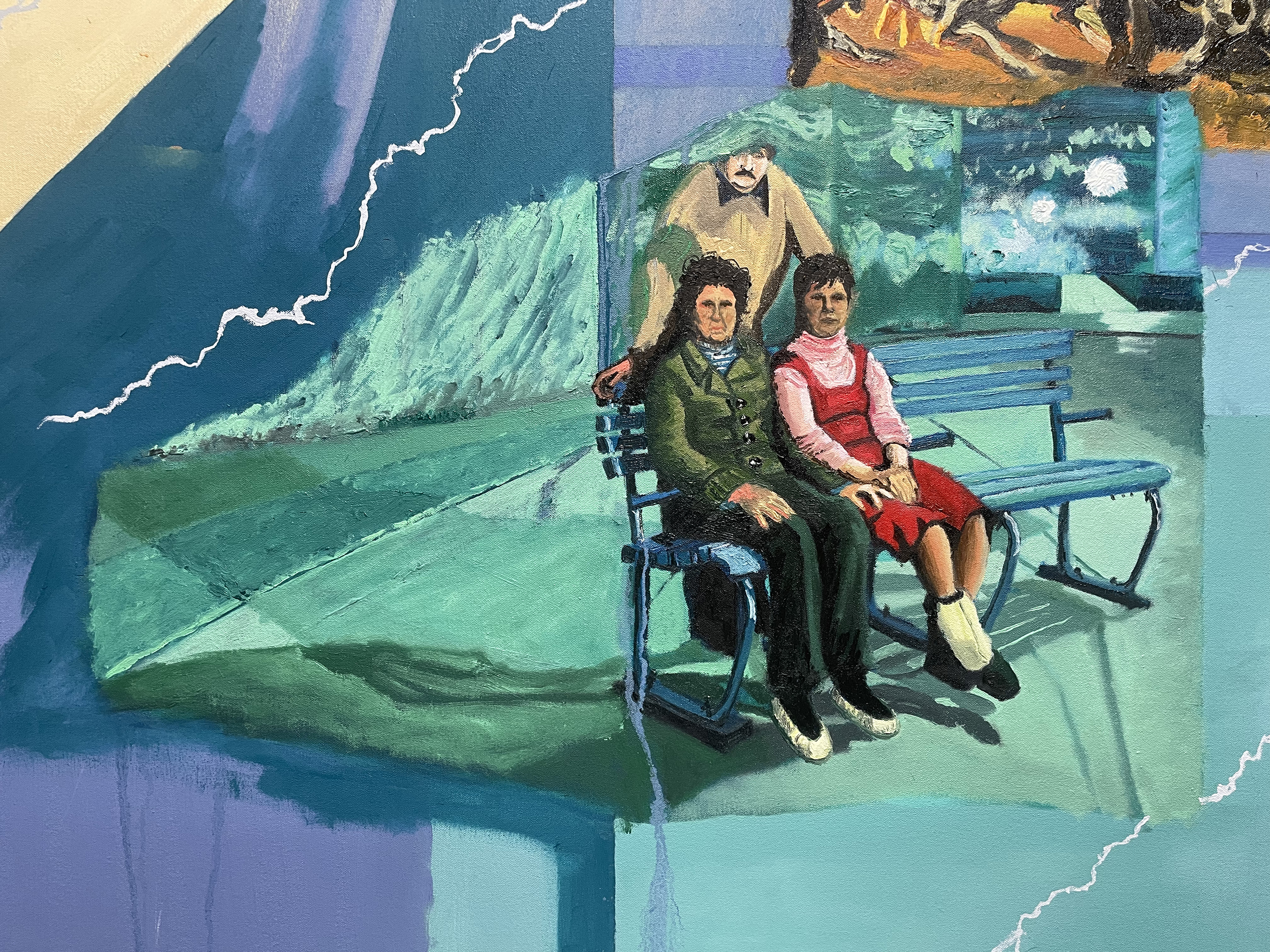
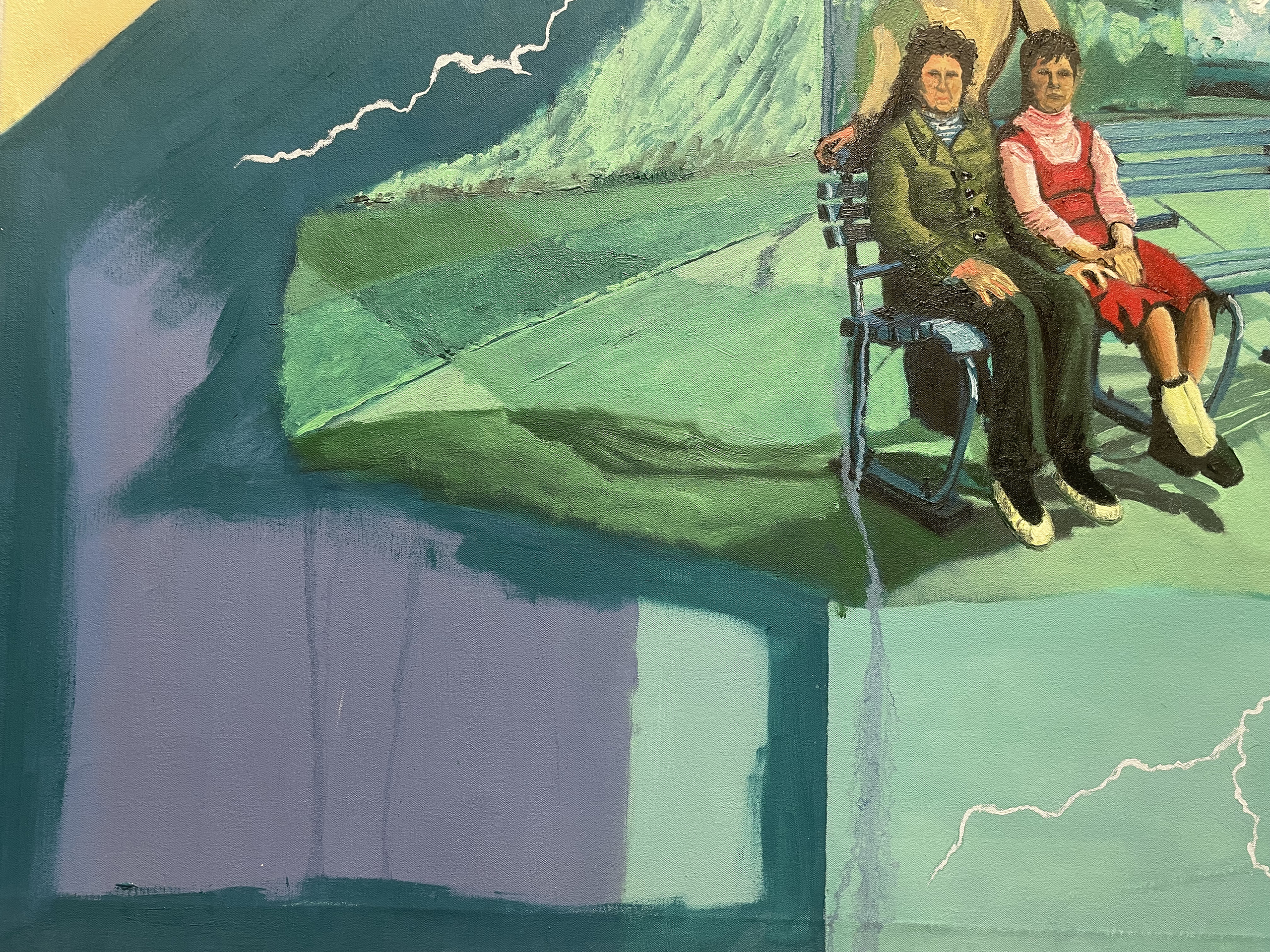
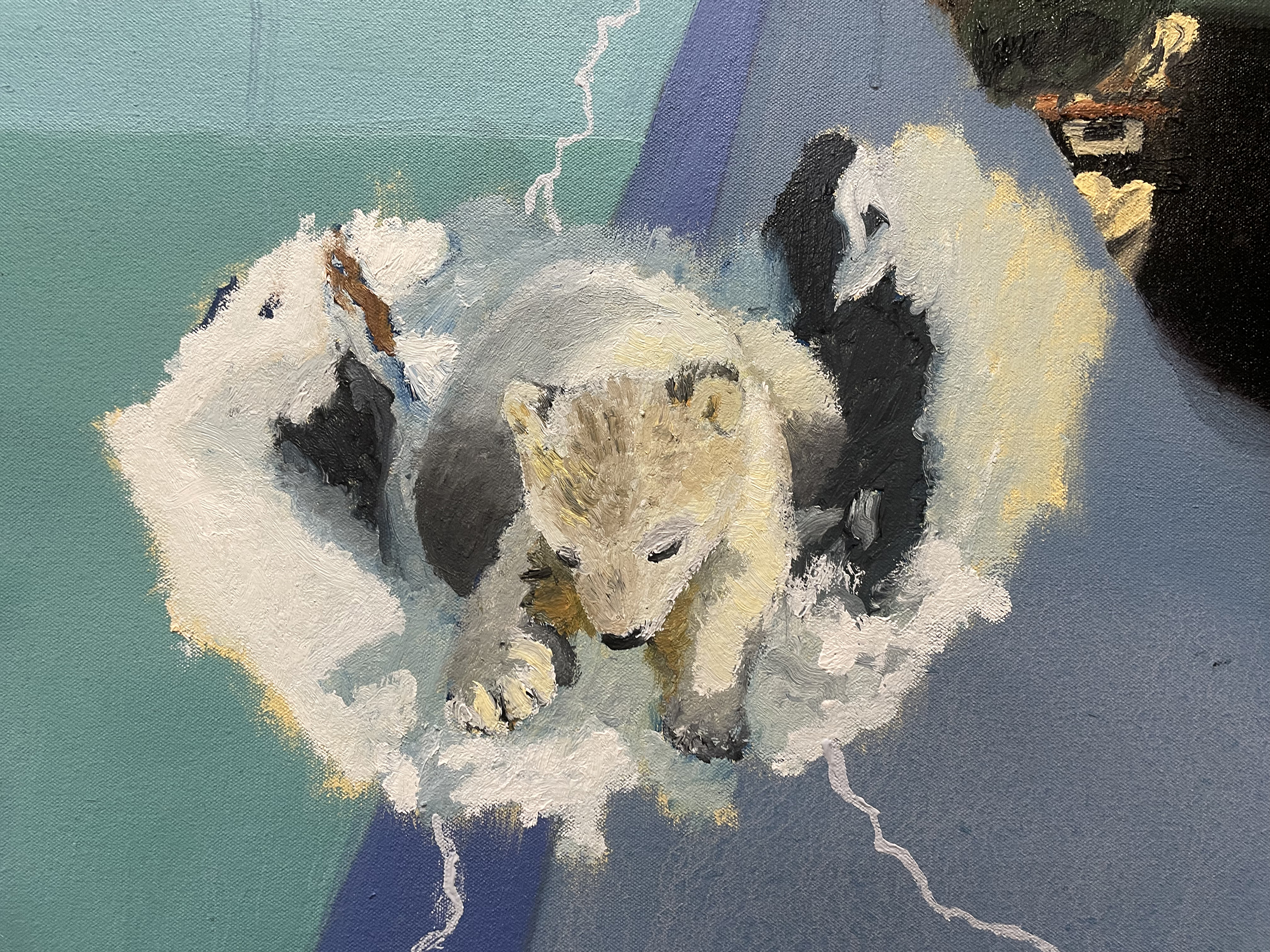
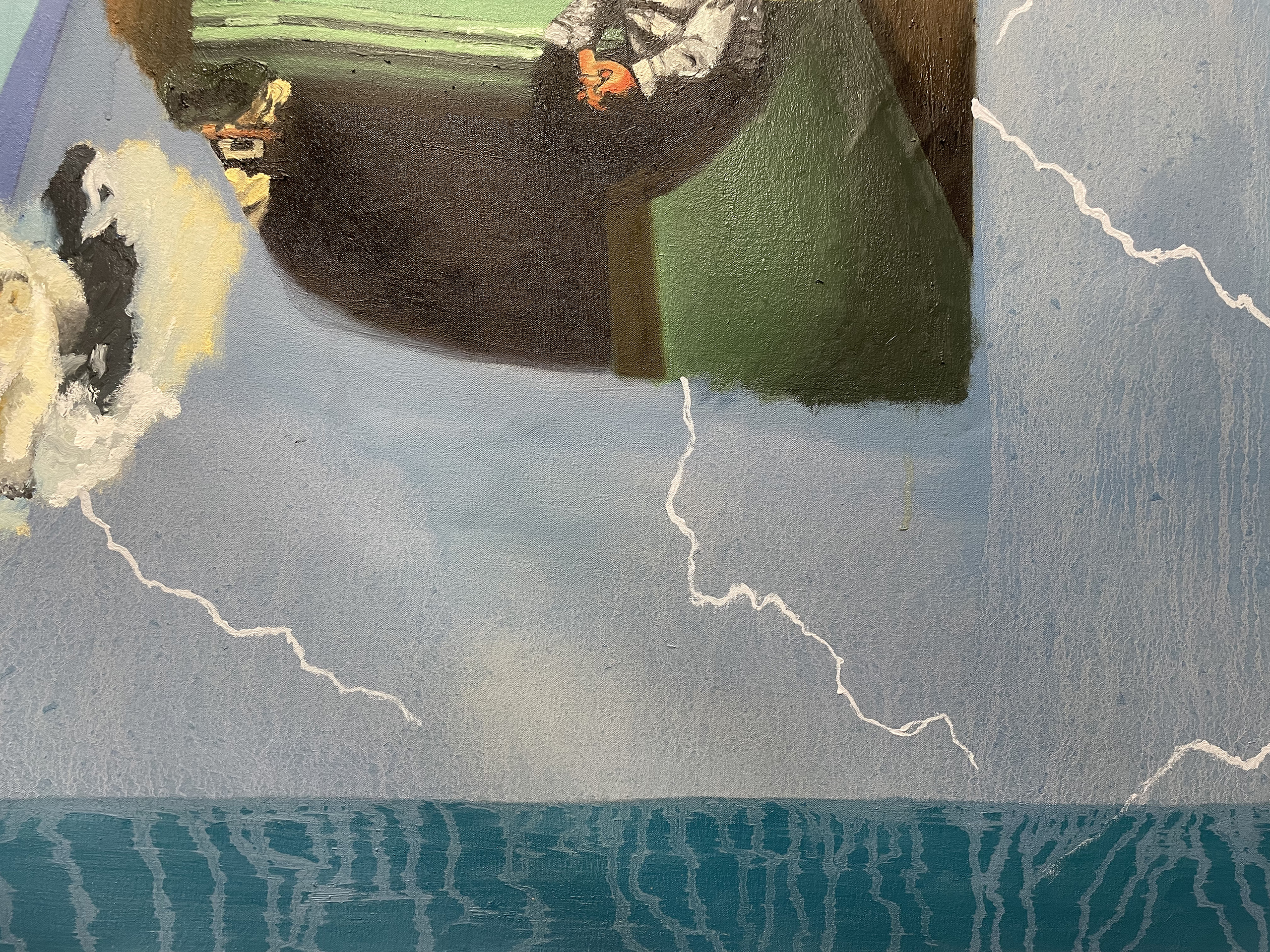
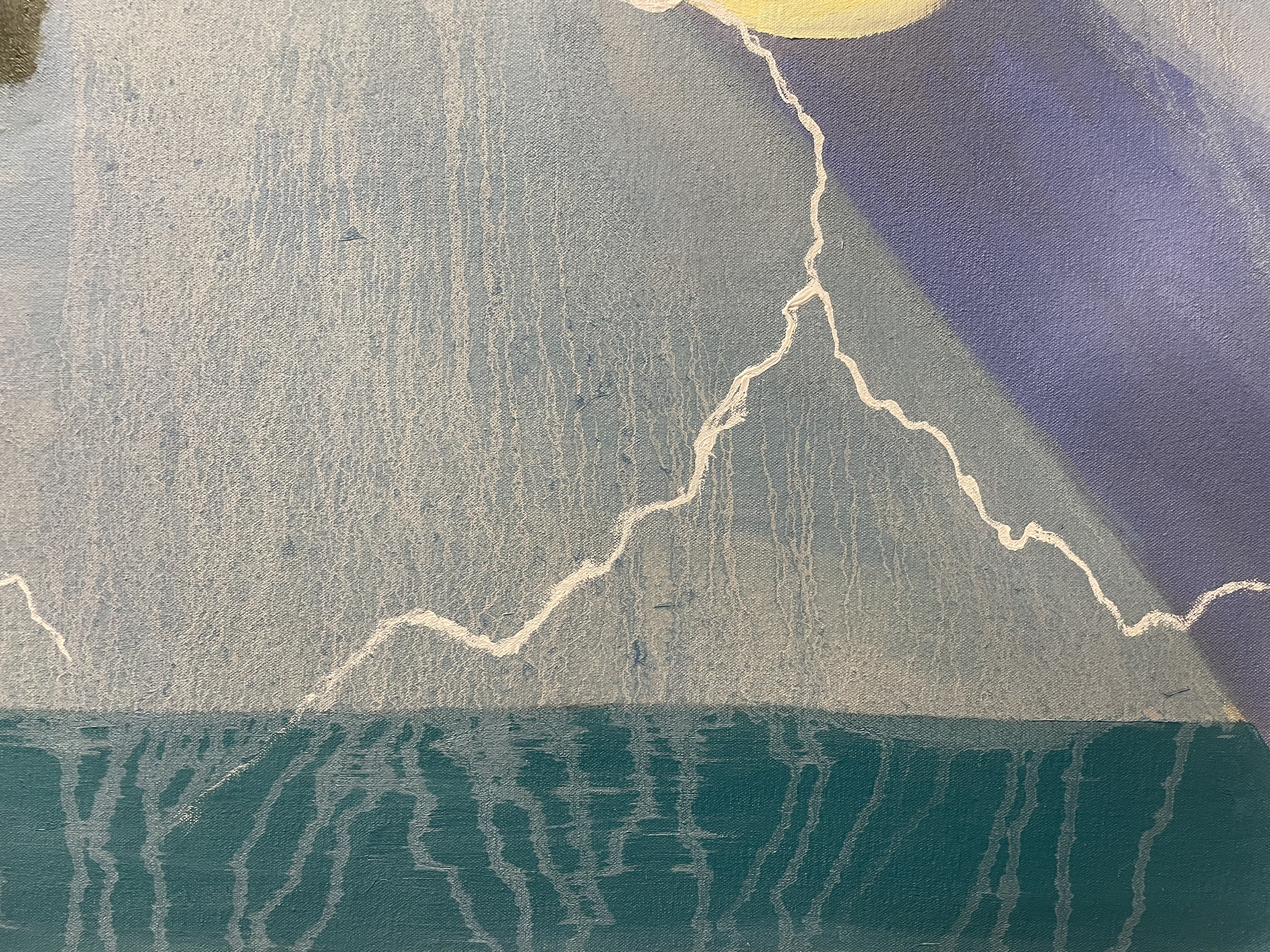
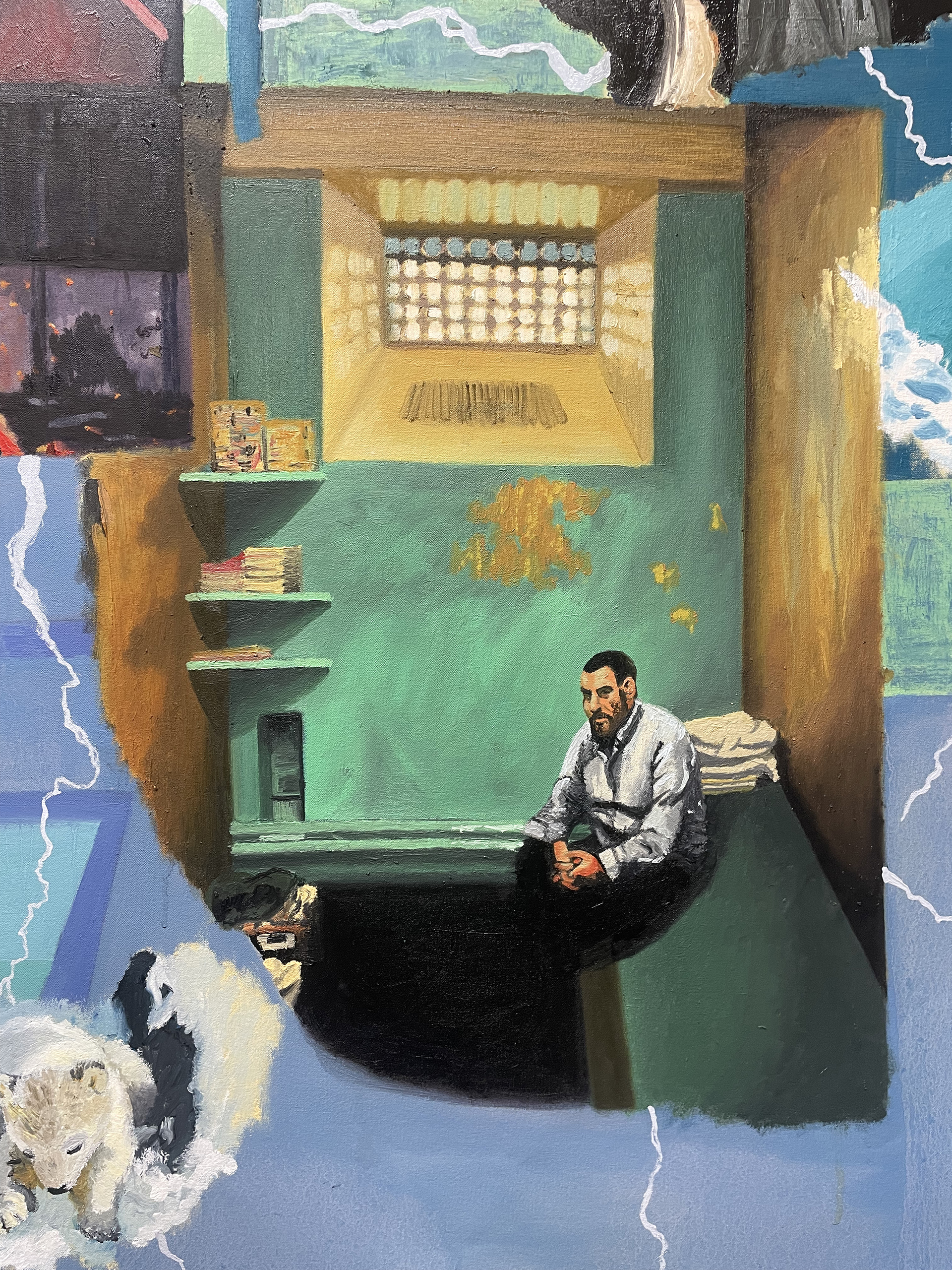
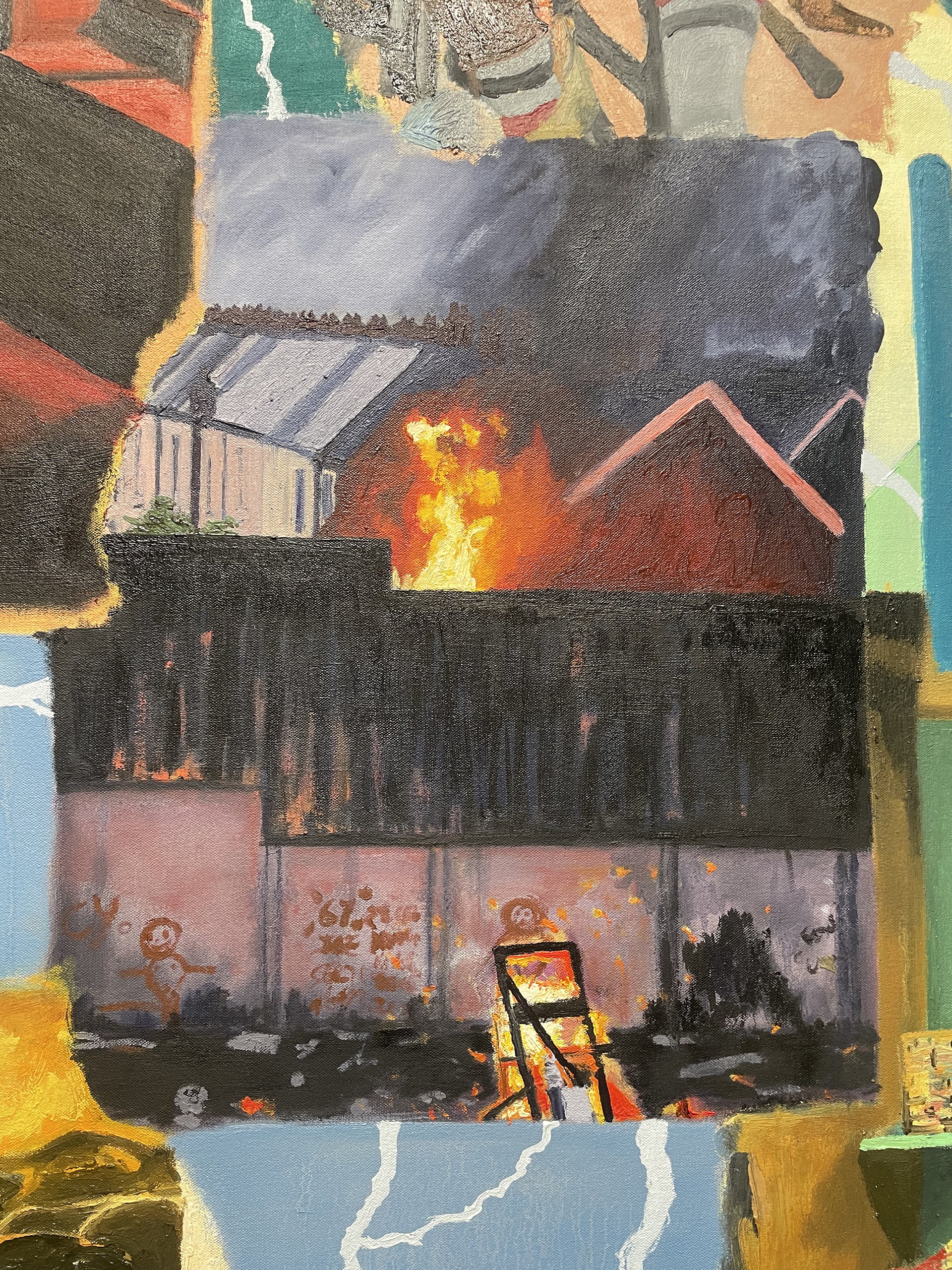
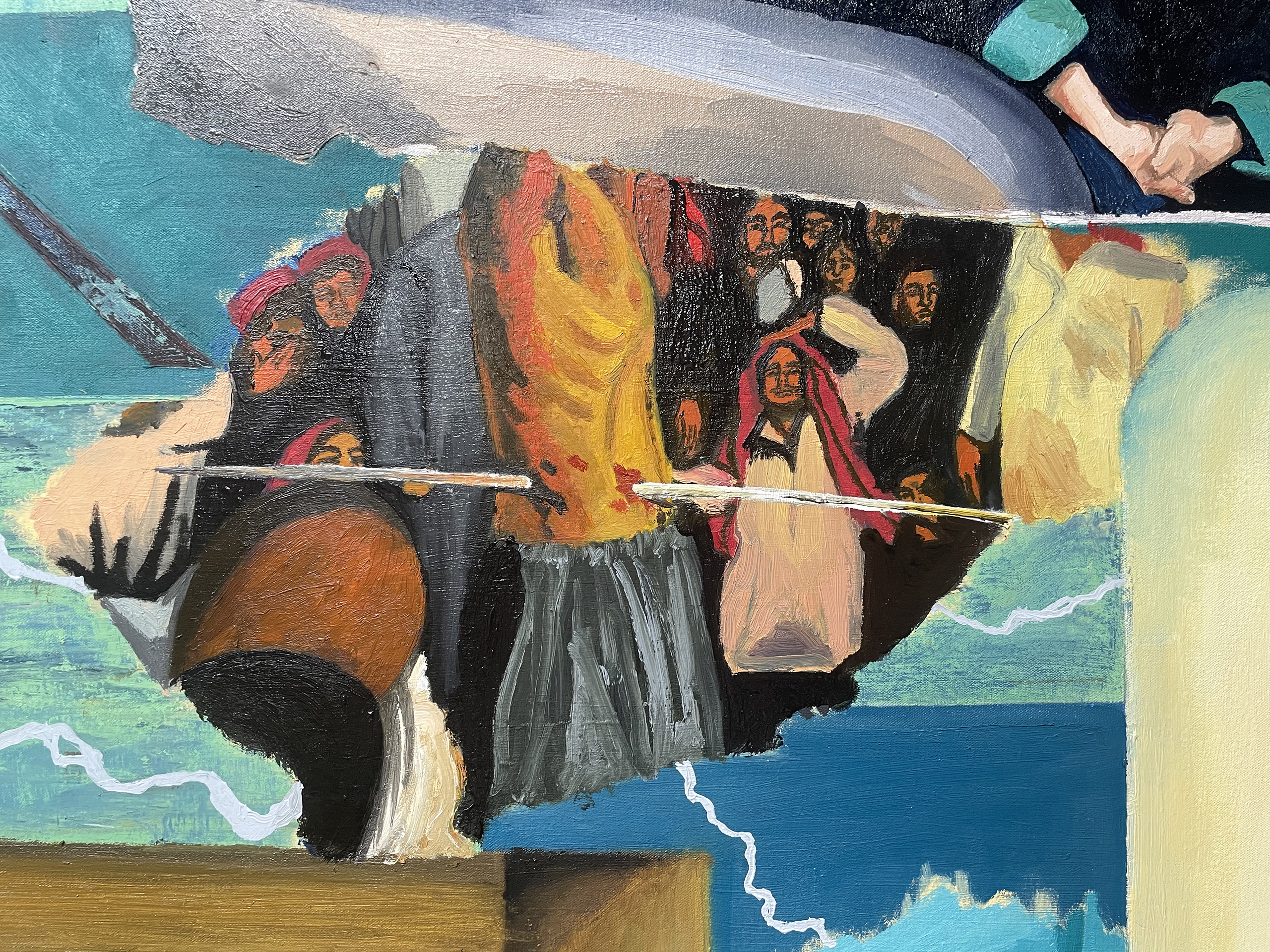
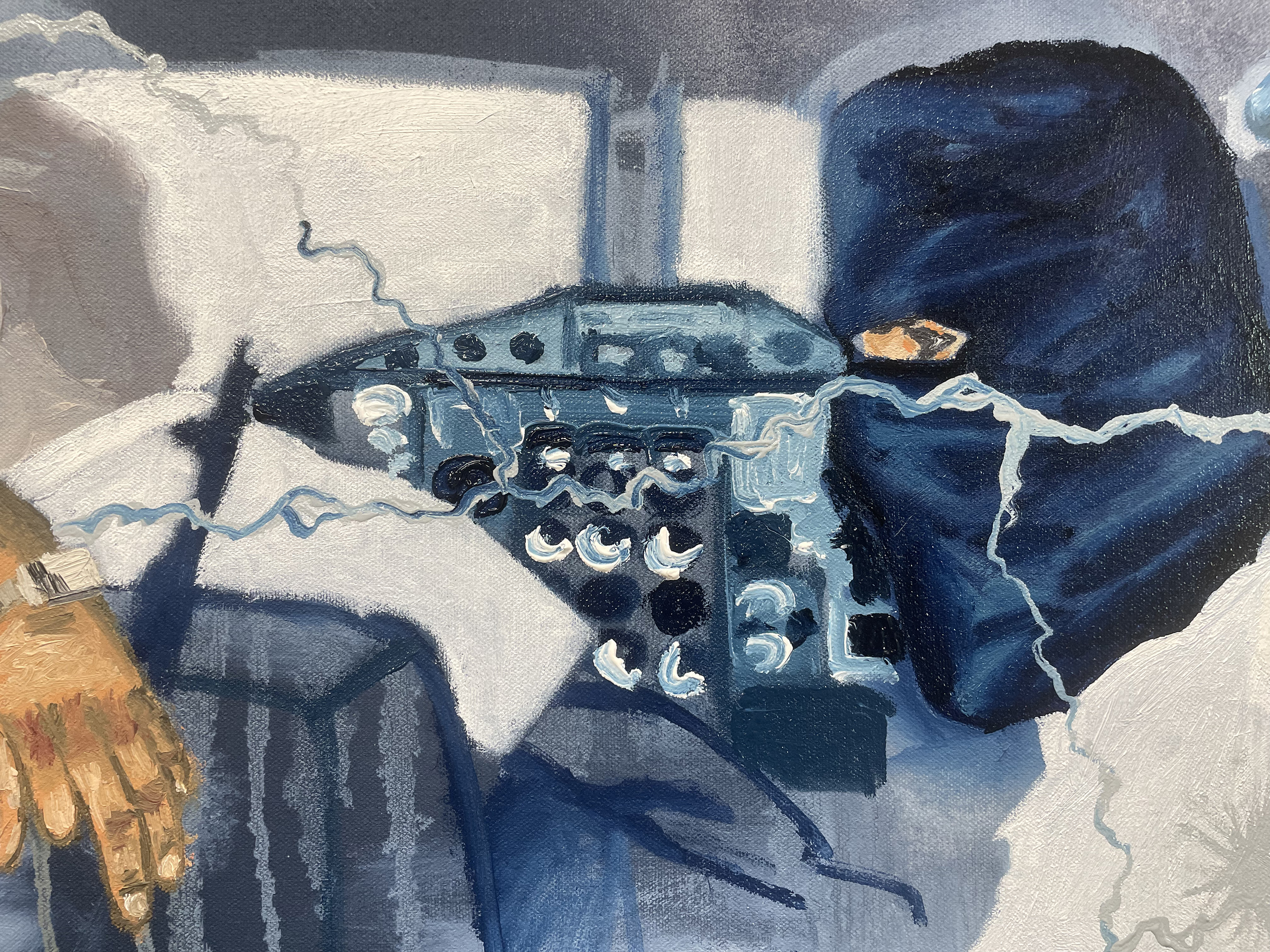
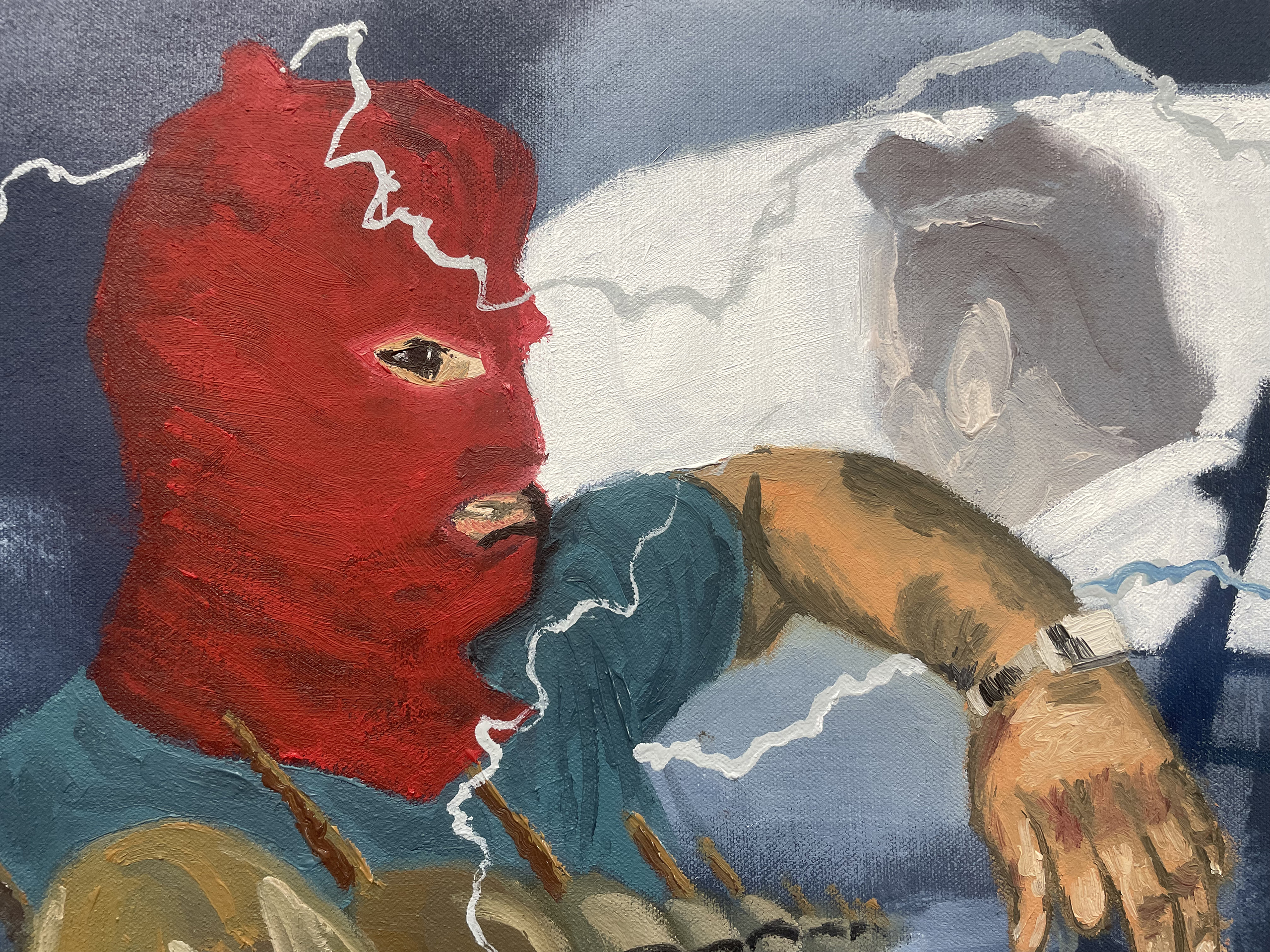
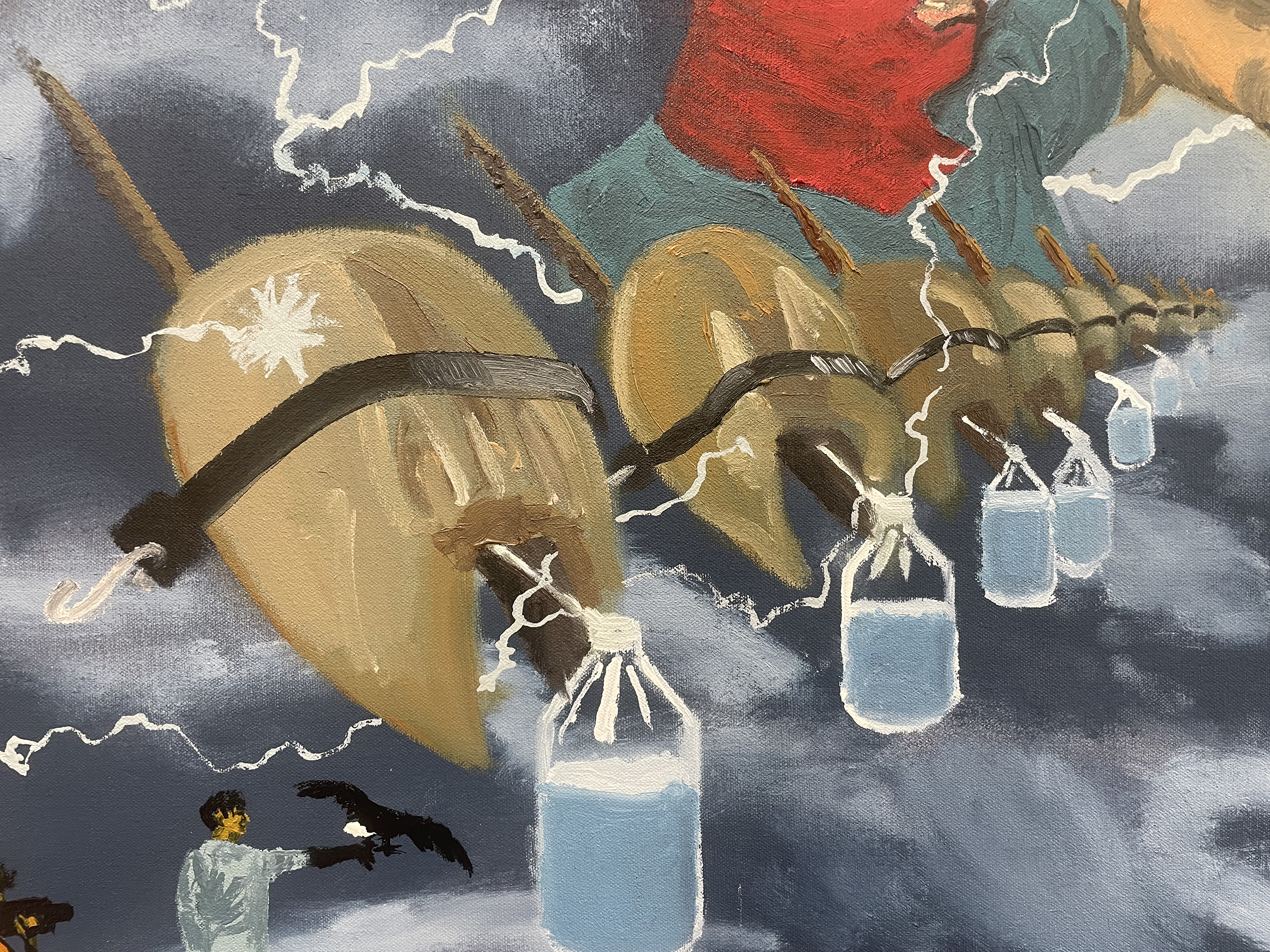
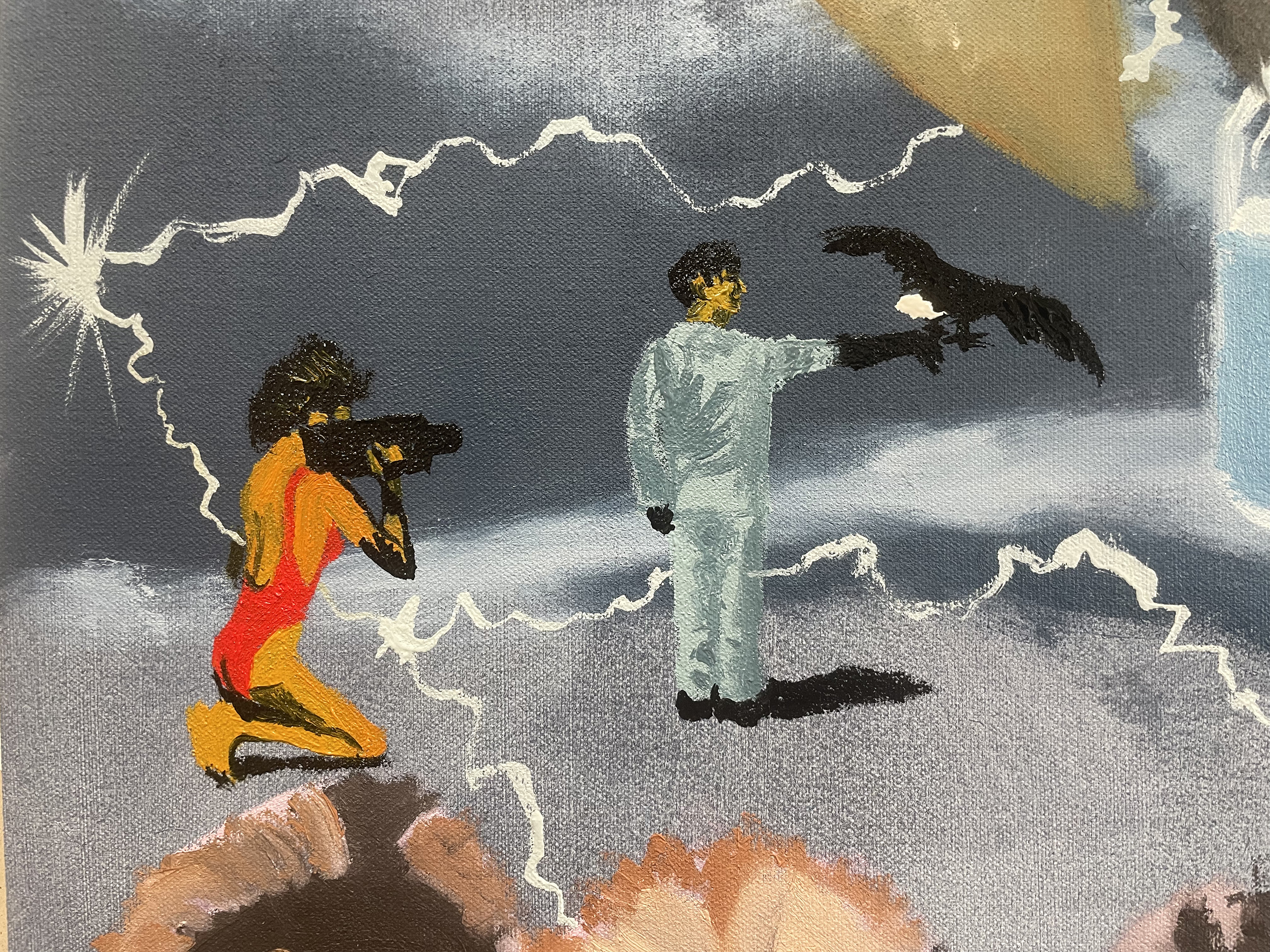
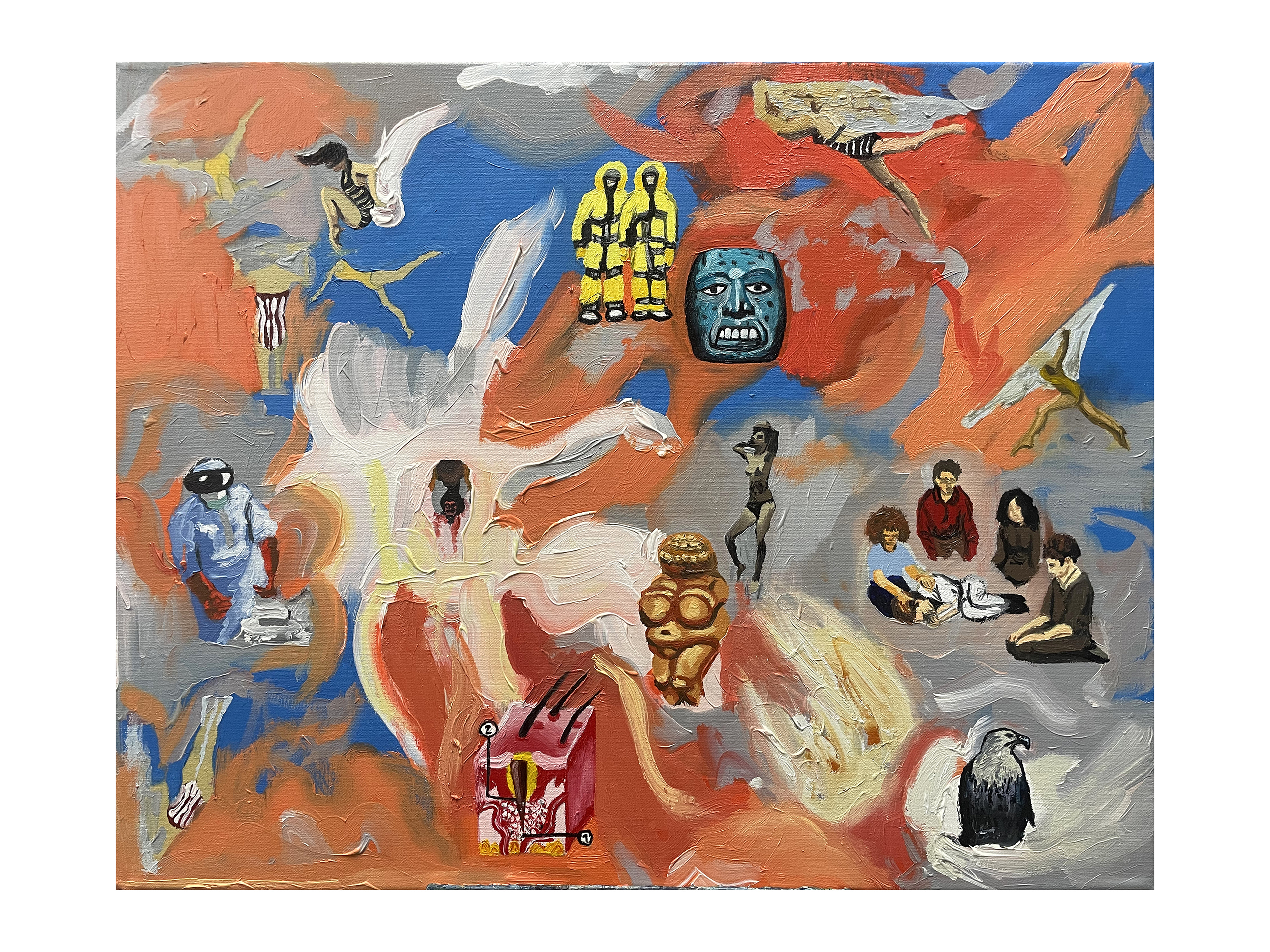
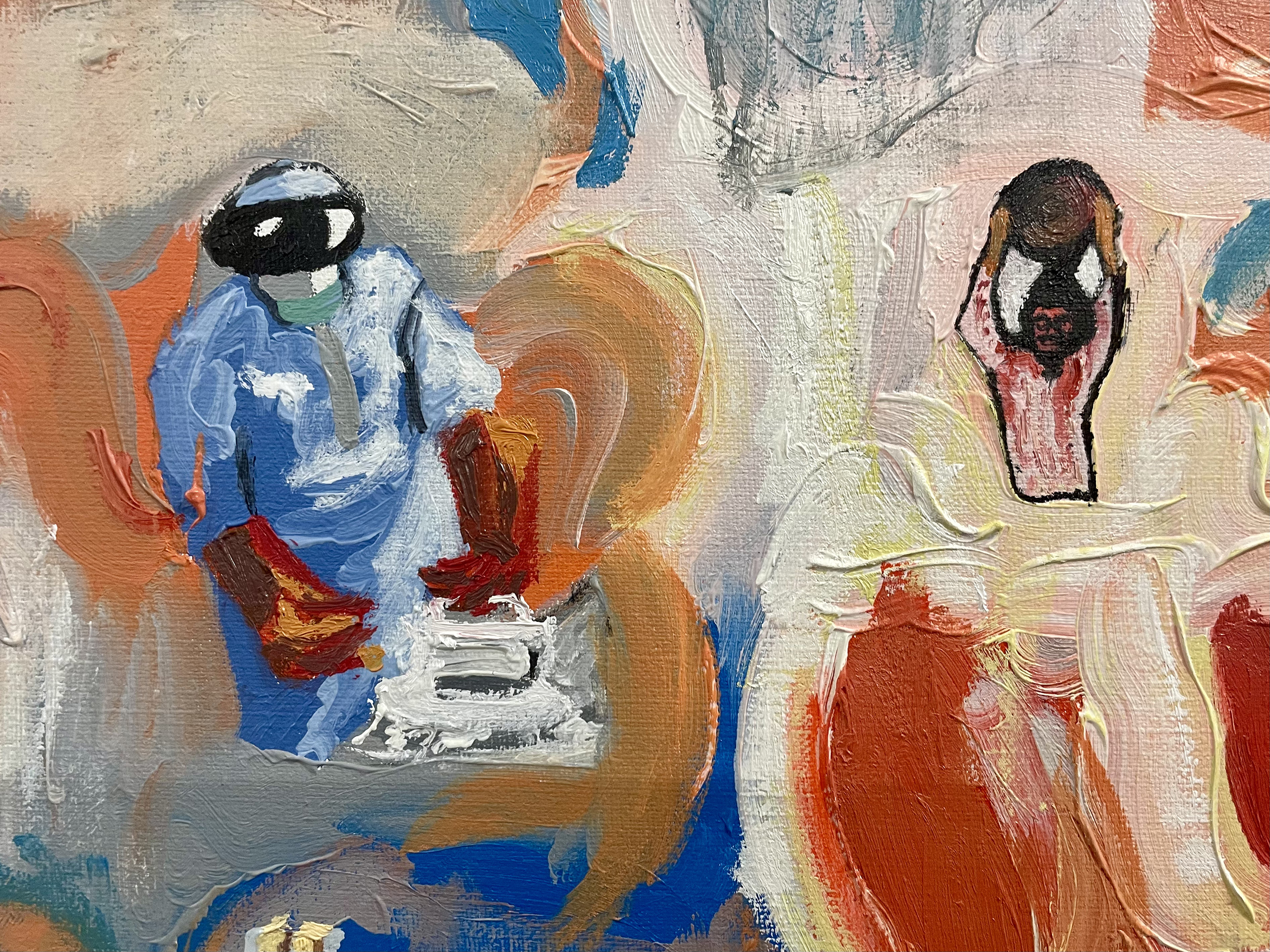
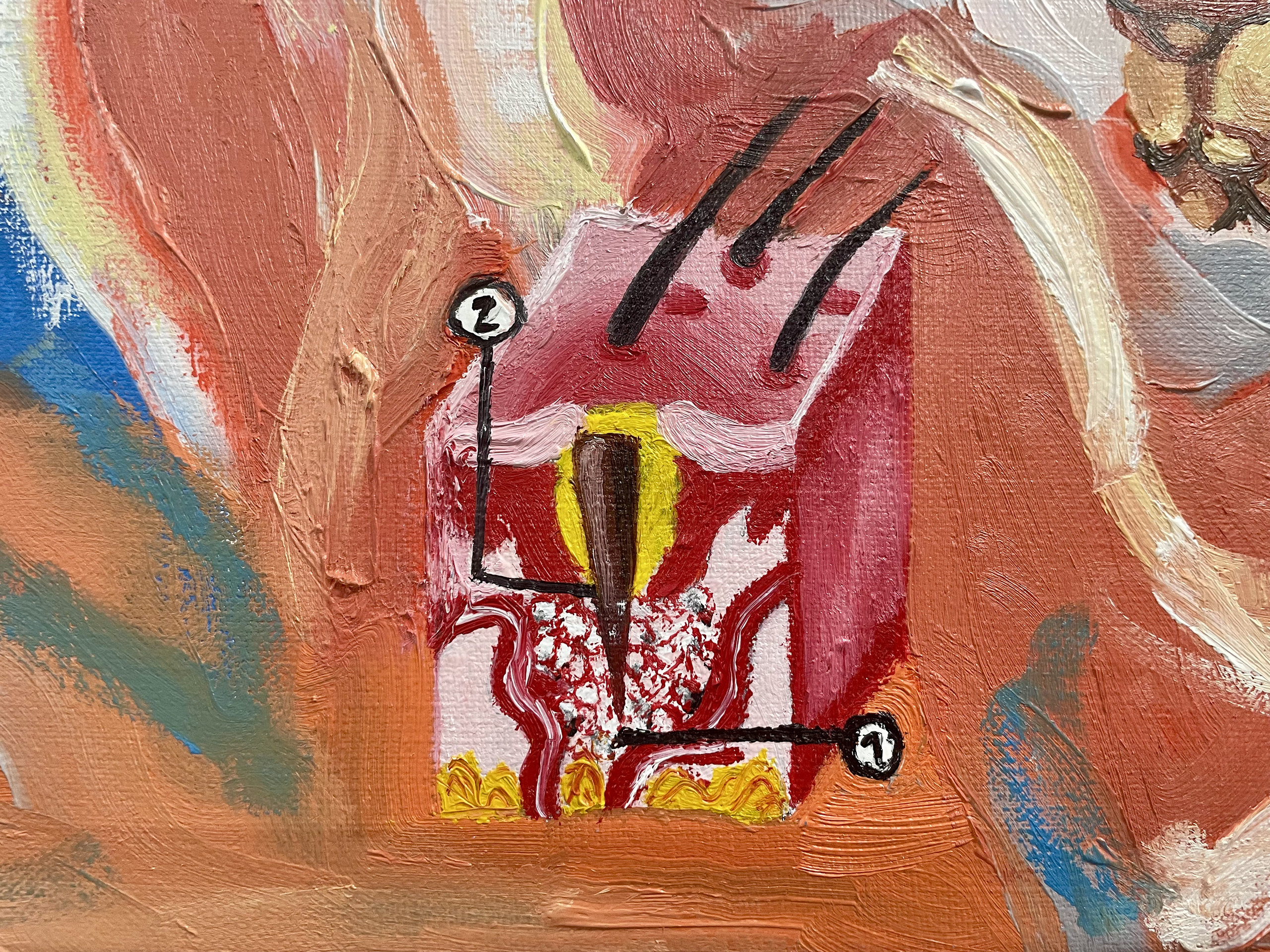
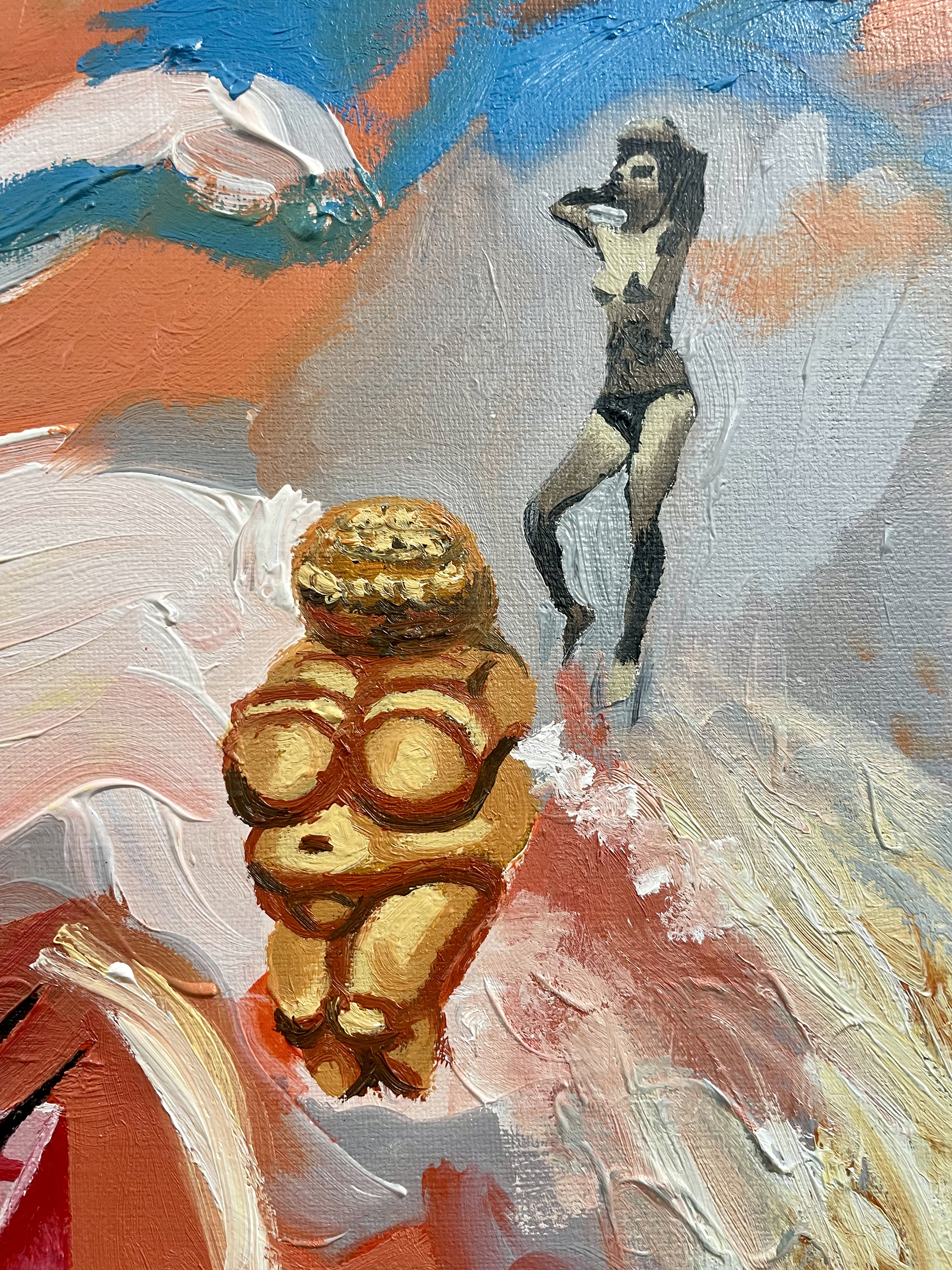
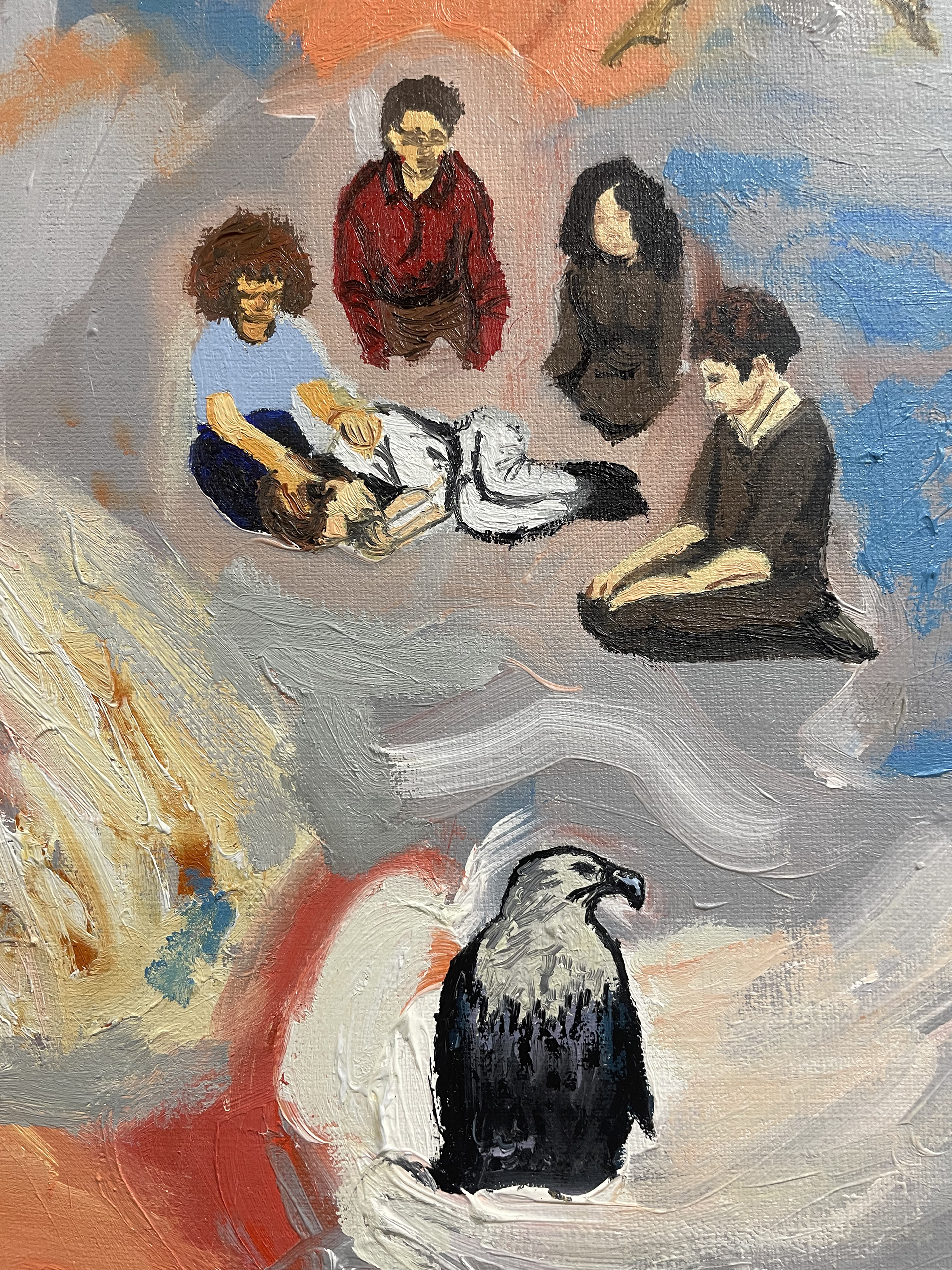
The Big Theatre

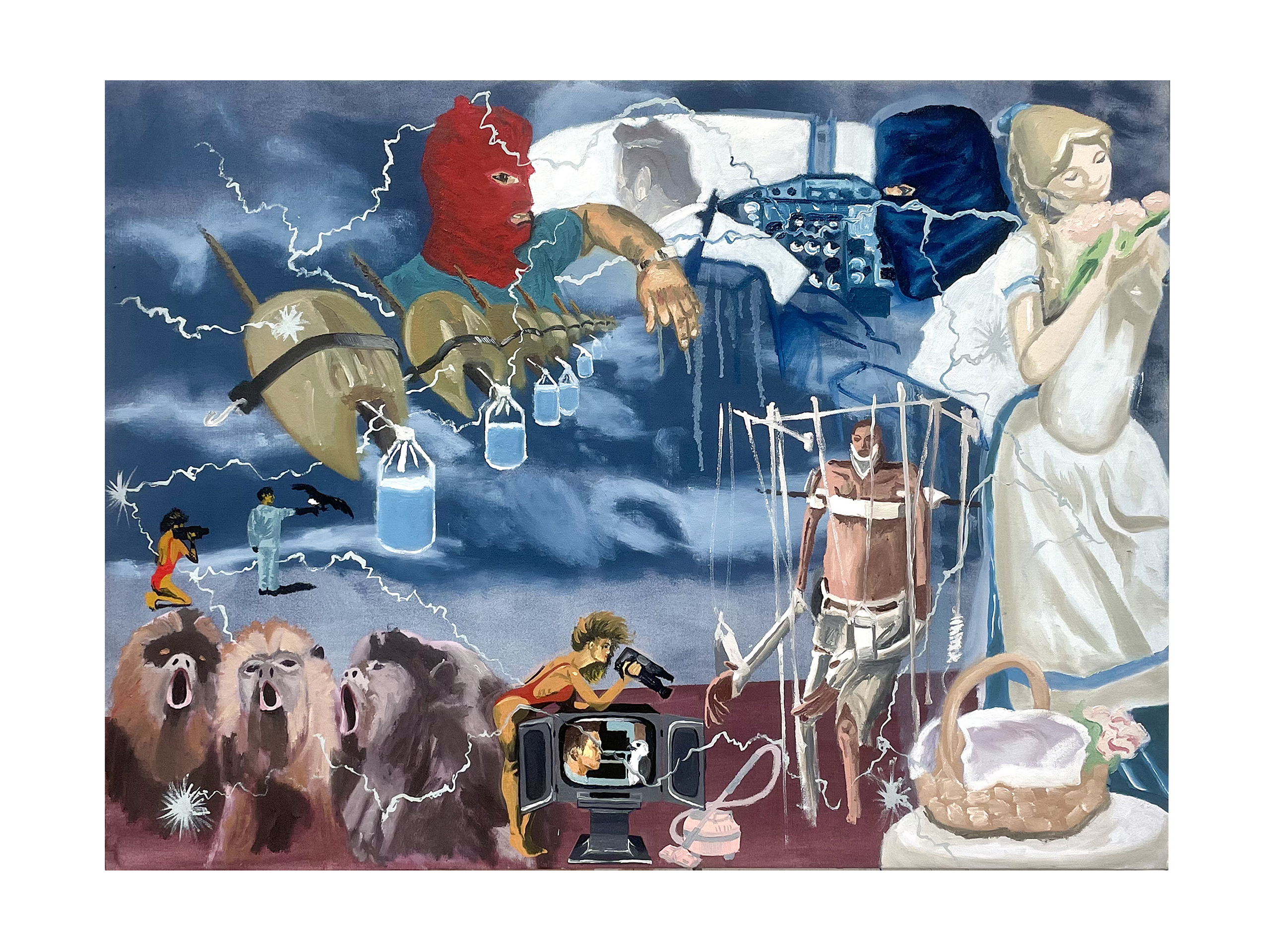
Oil on canvas
100x100cm

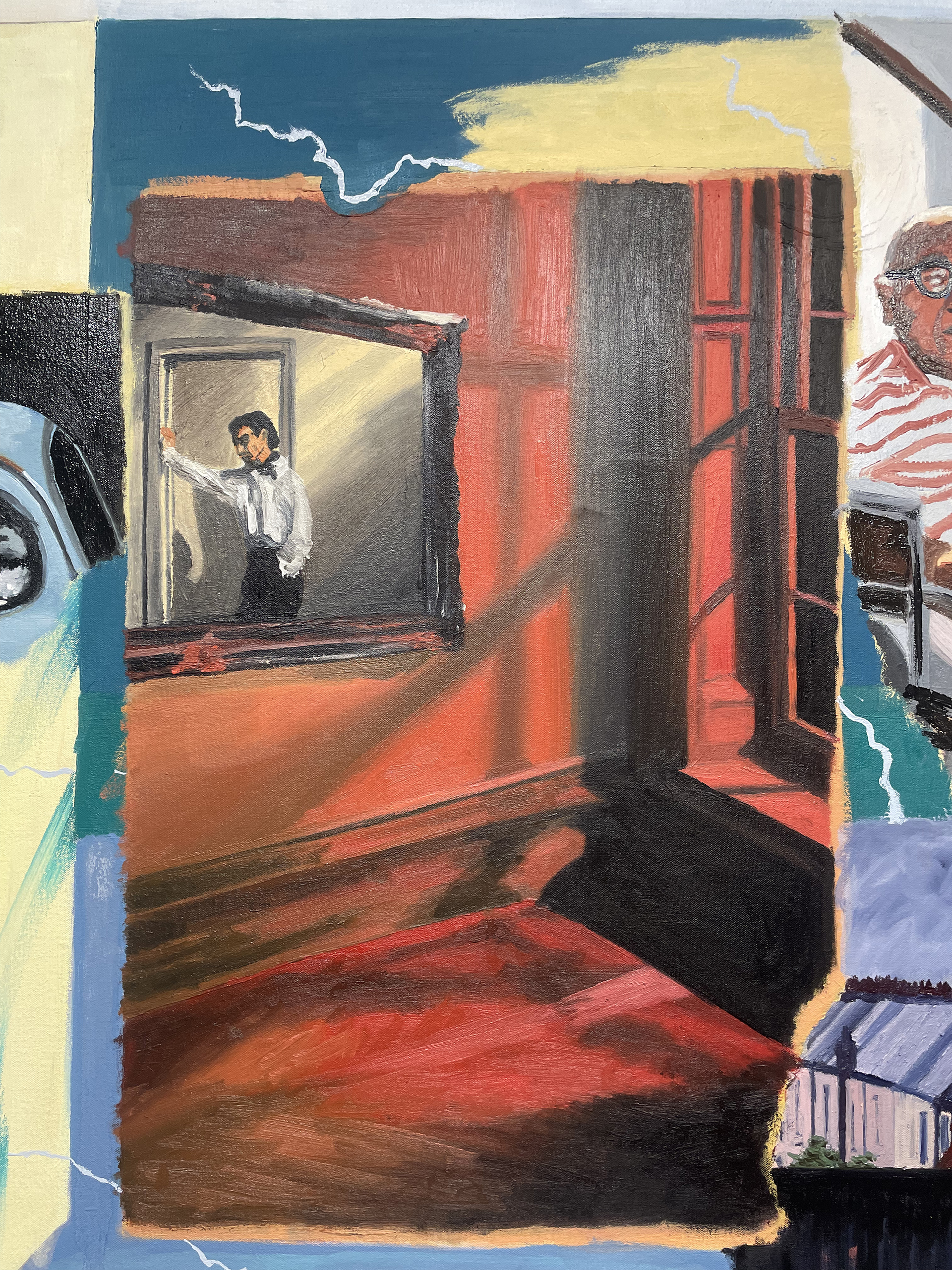
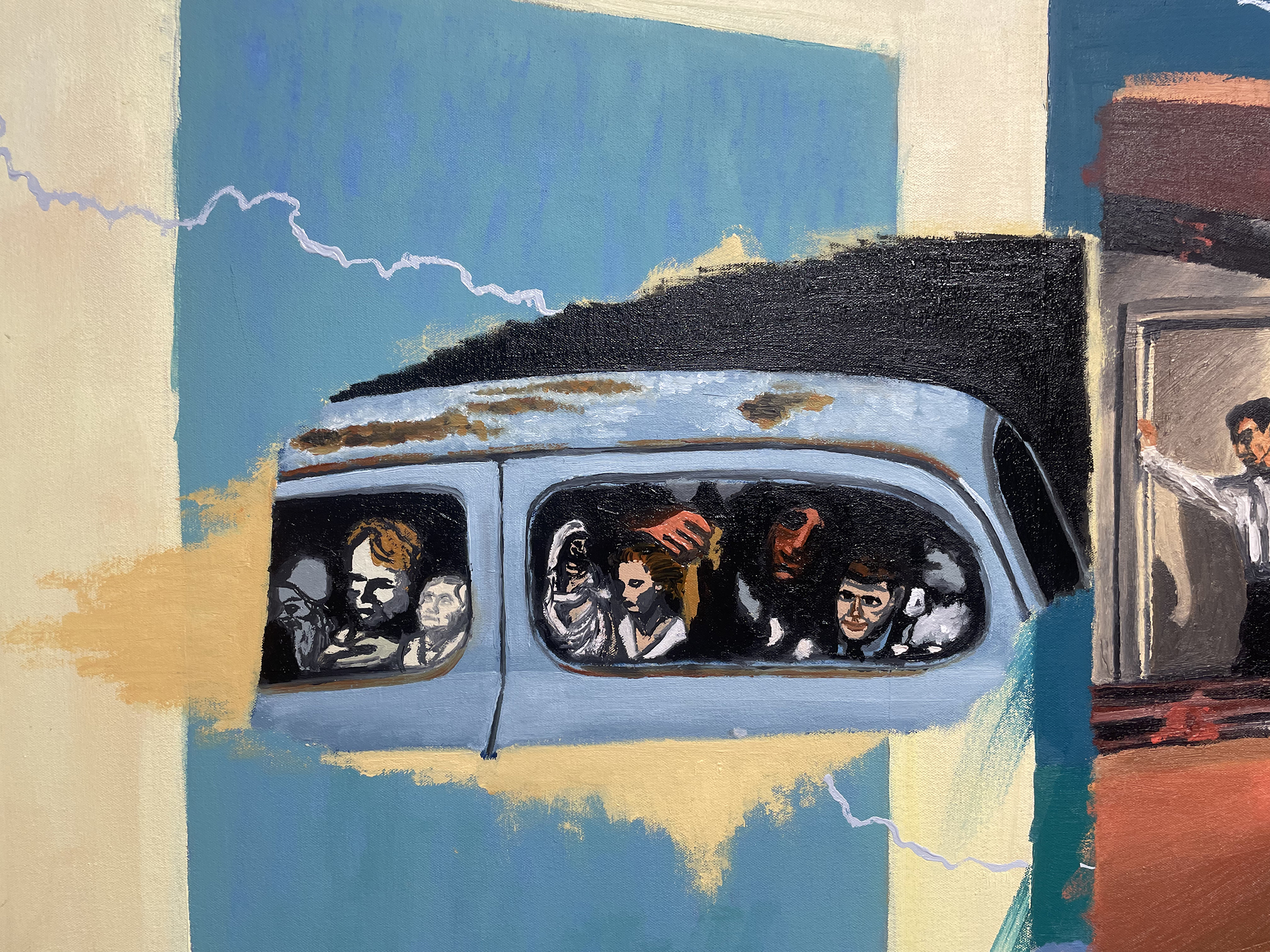
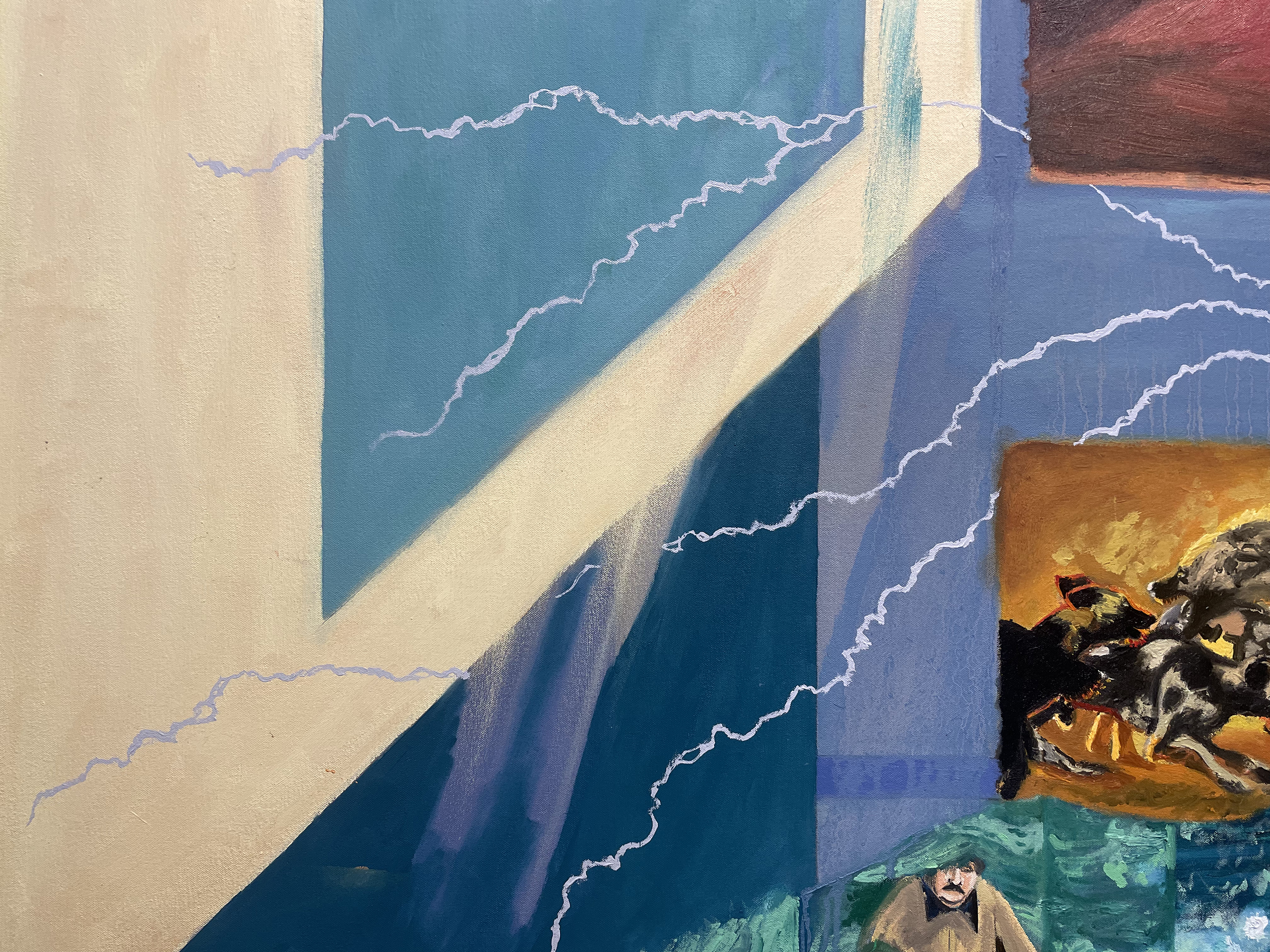
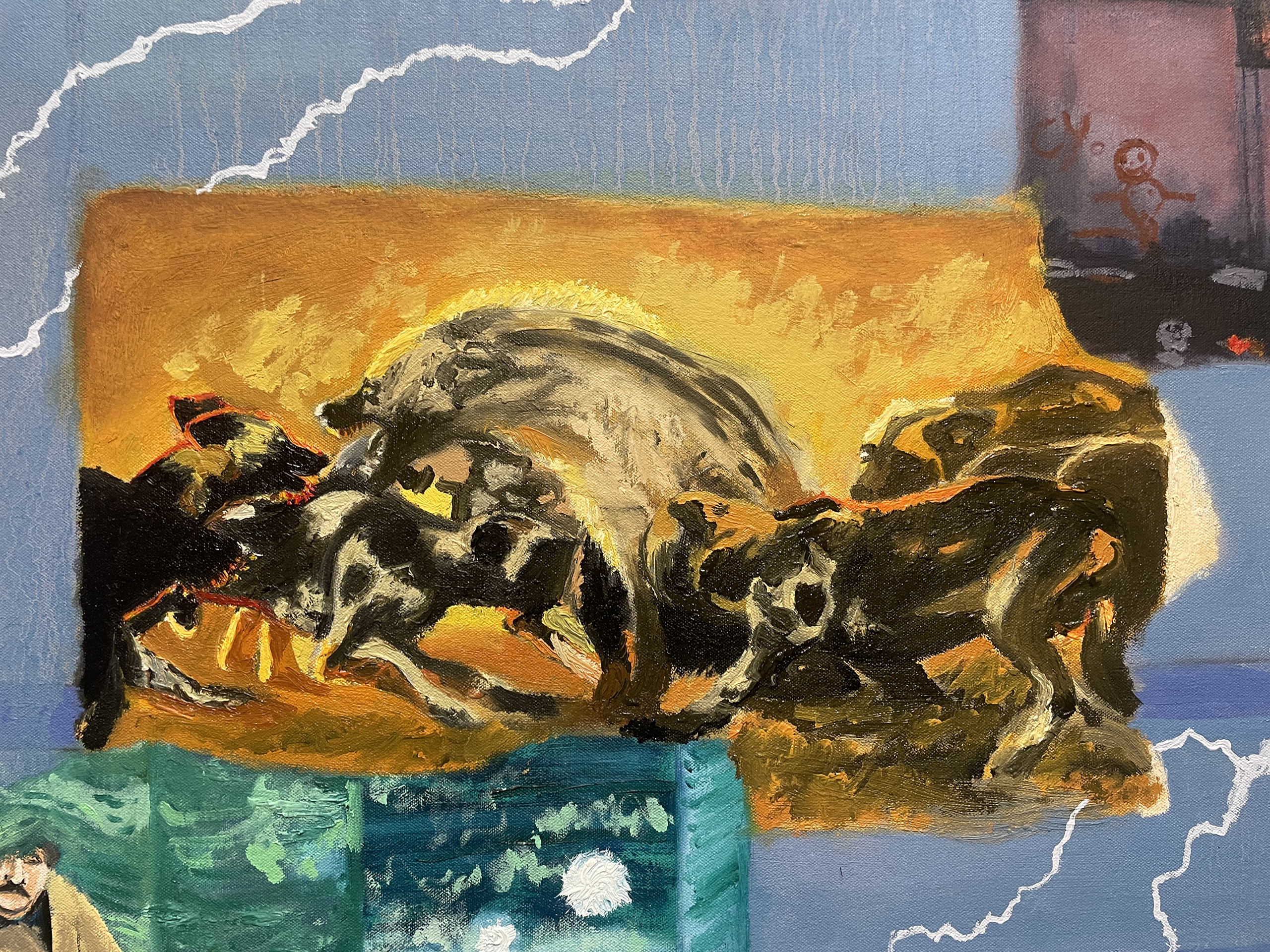
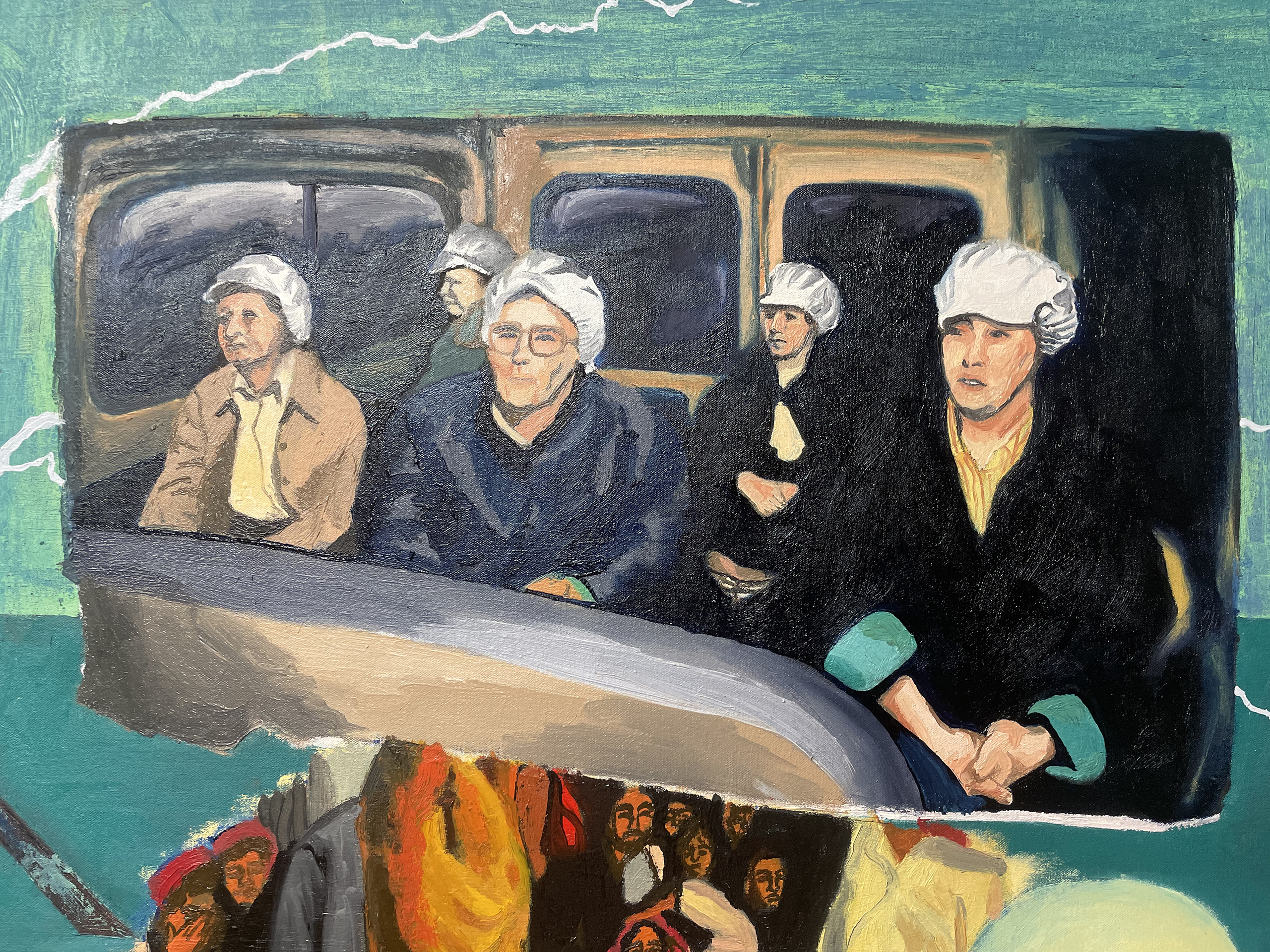
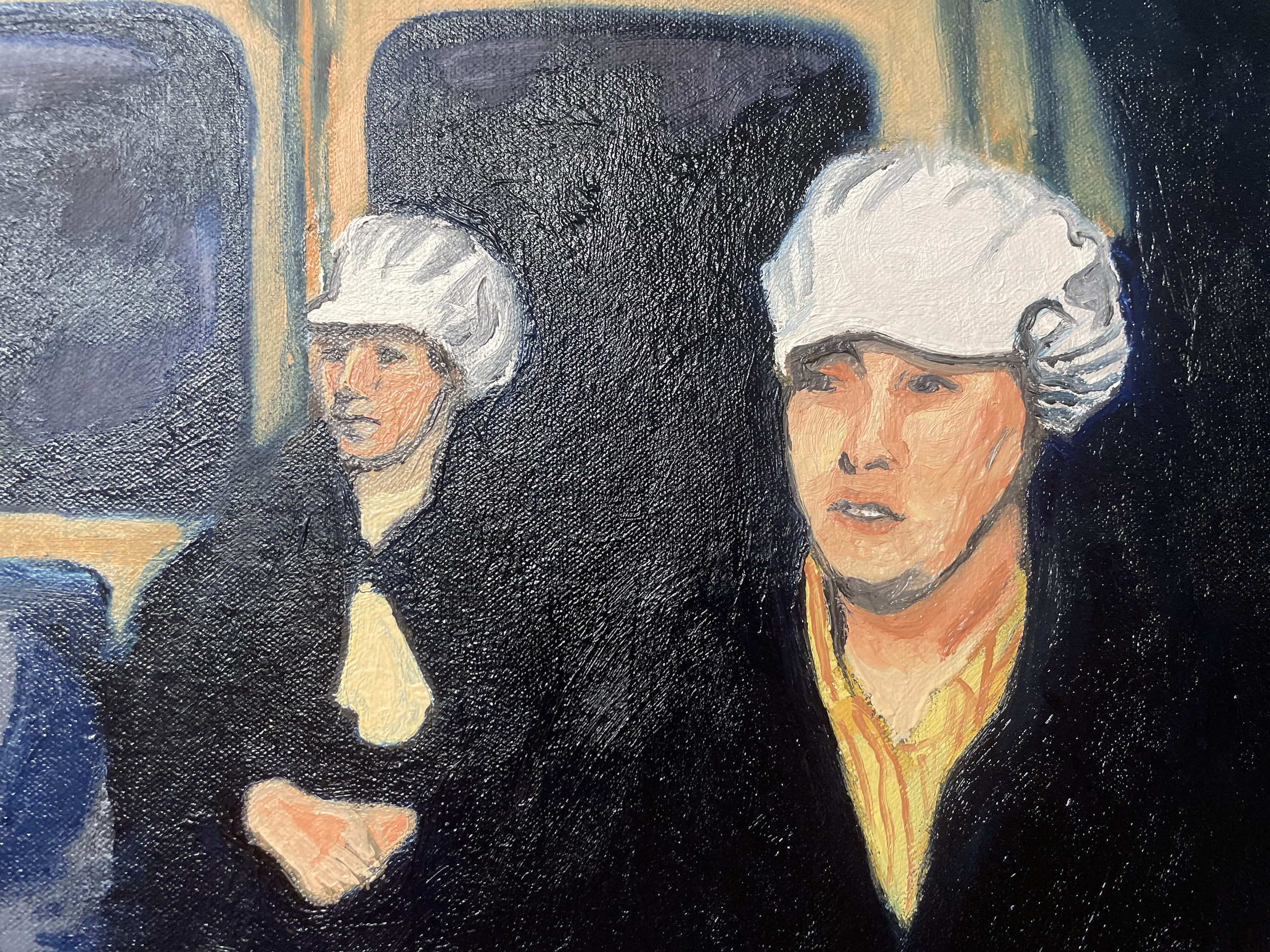
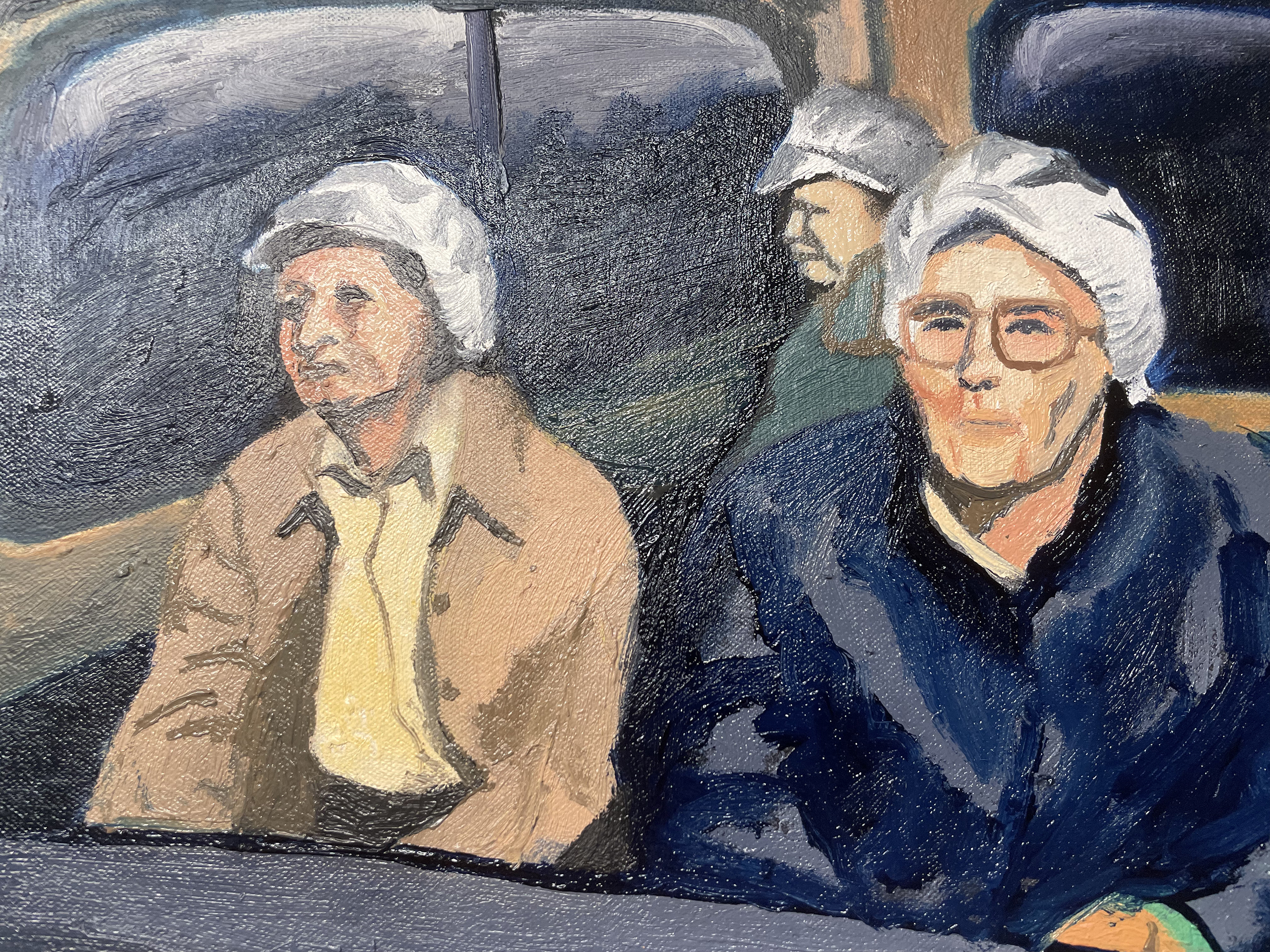
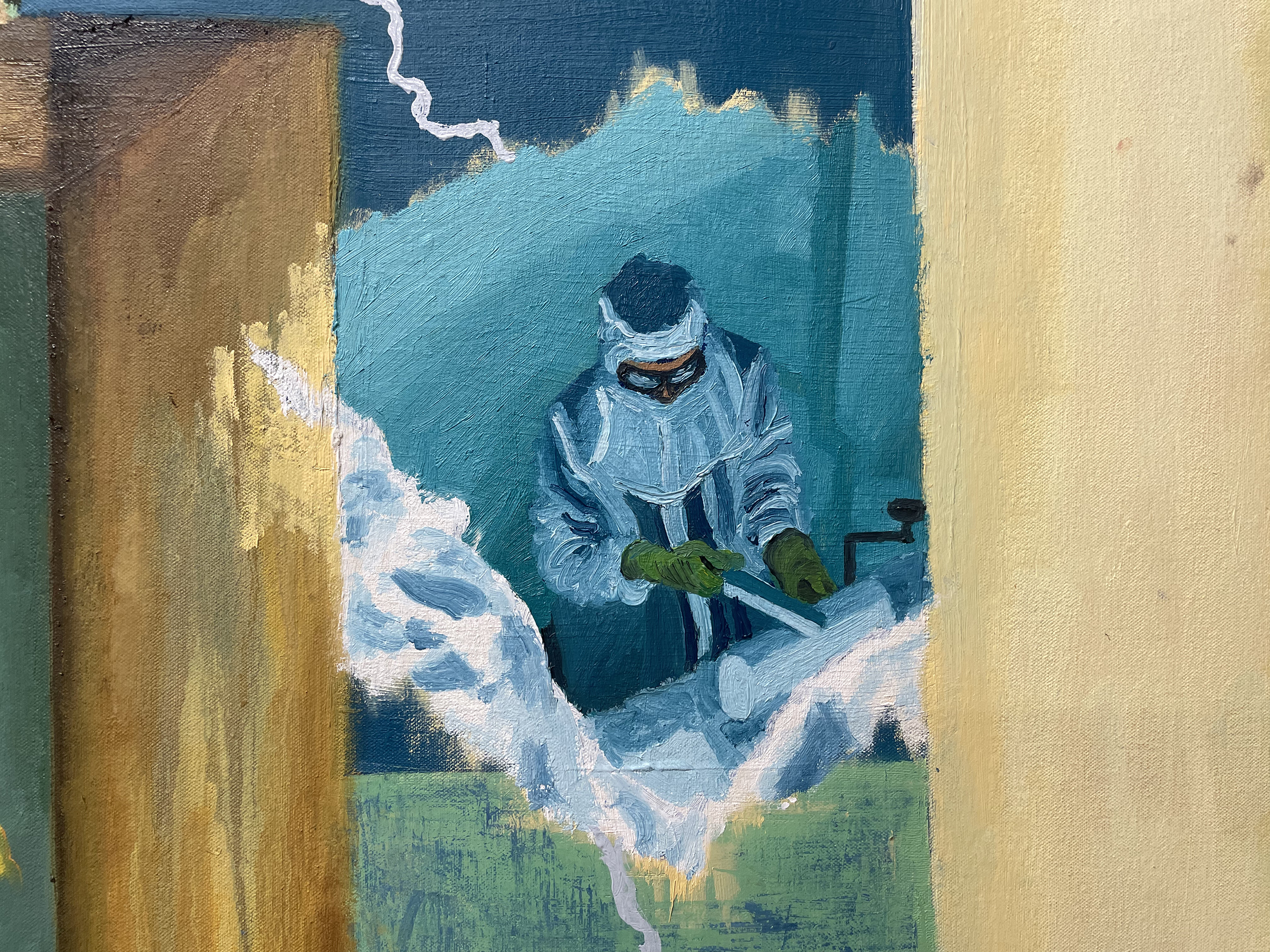
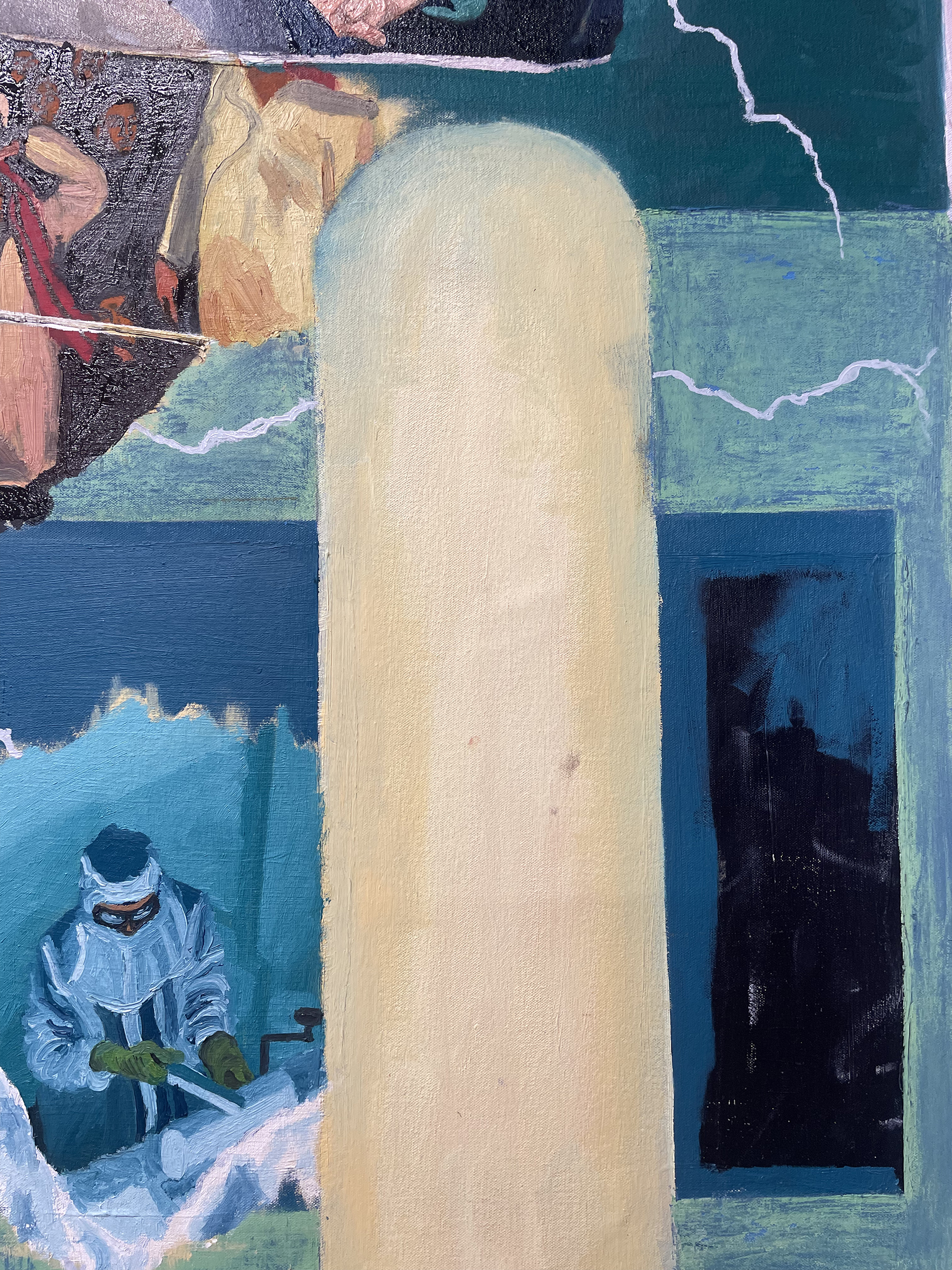
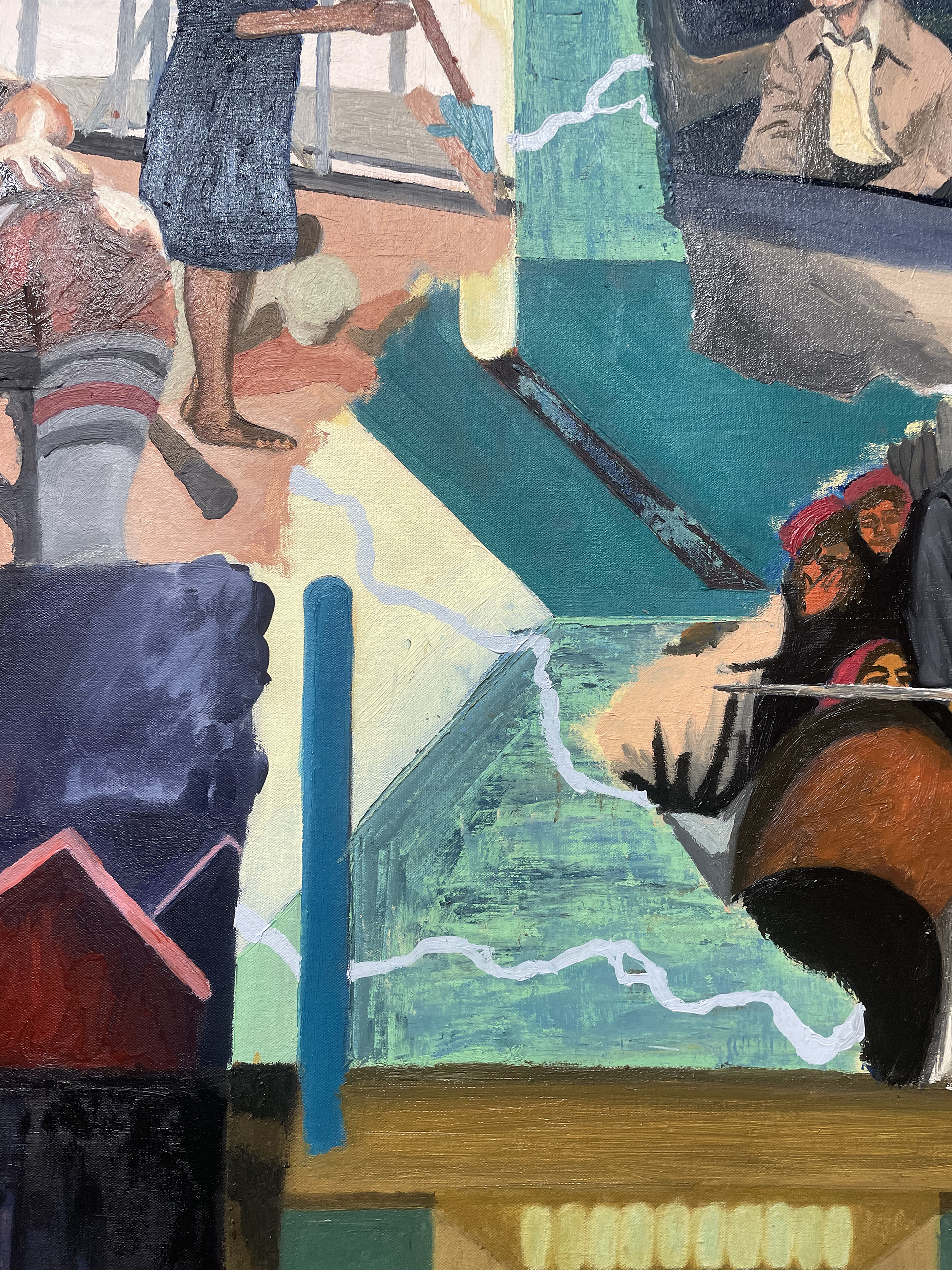
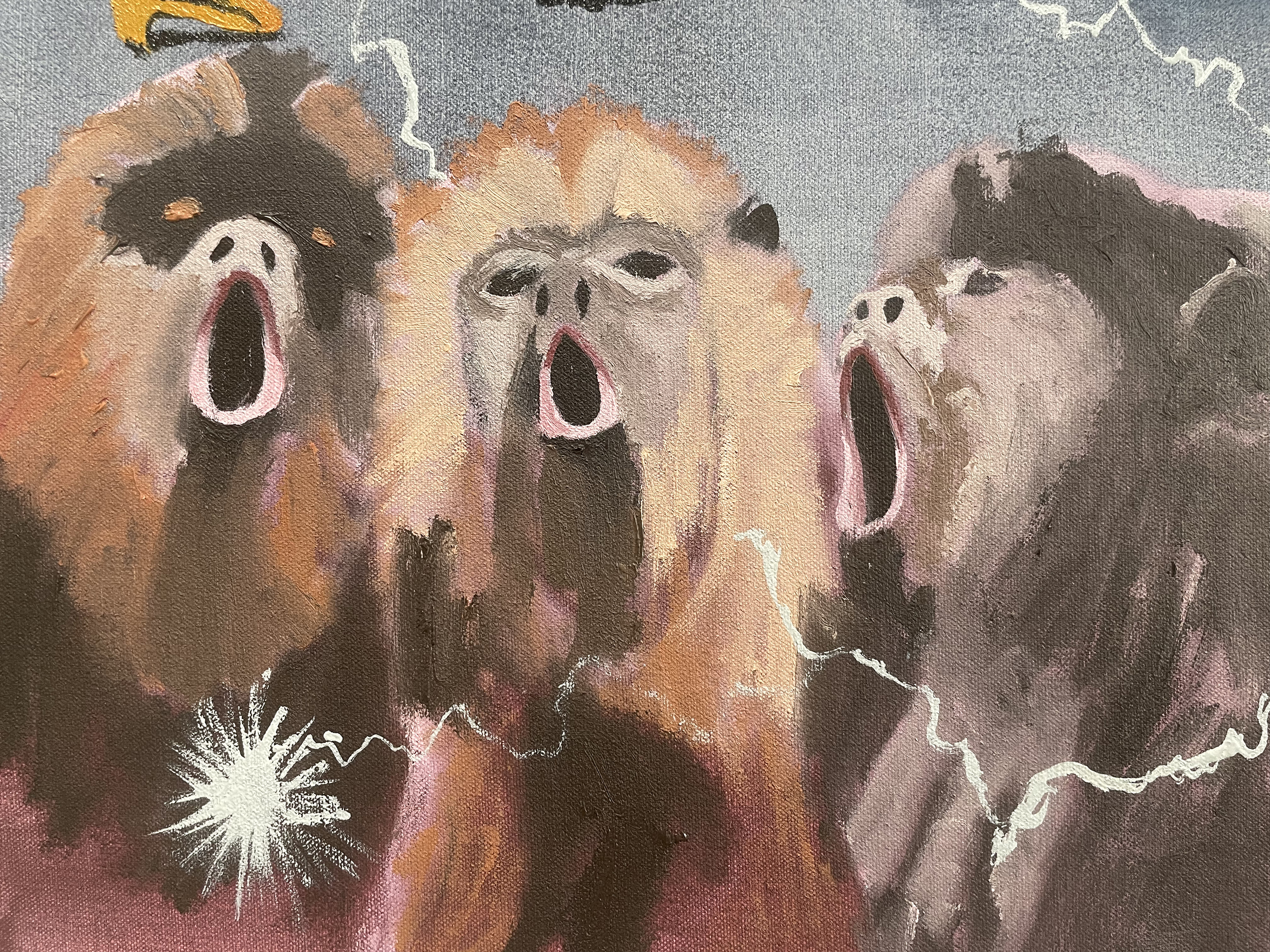
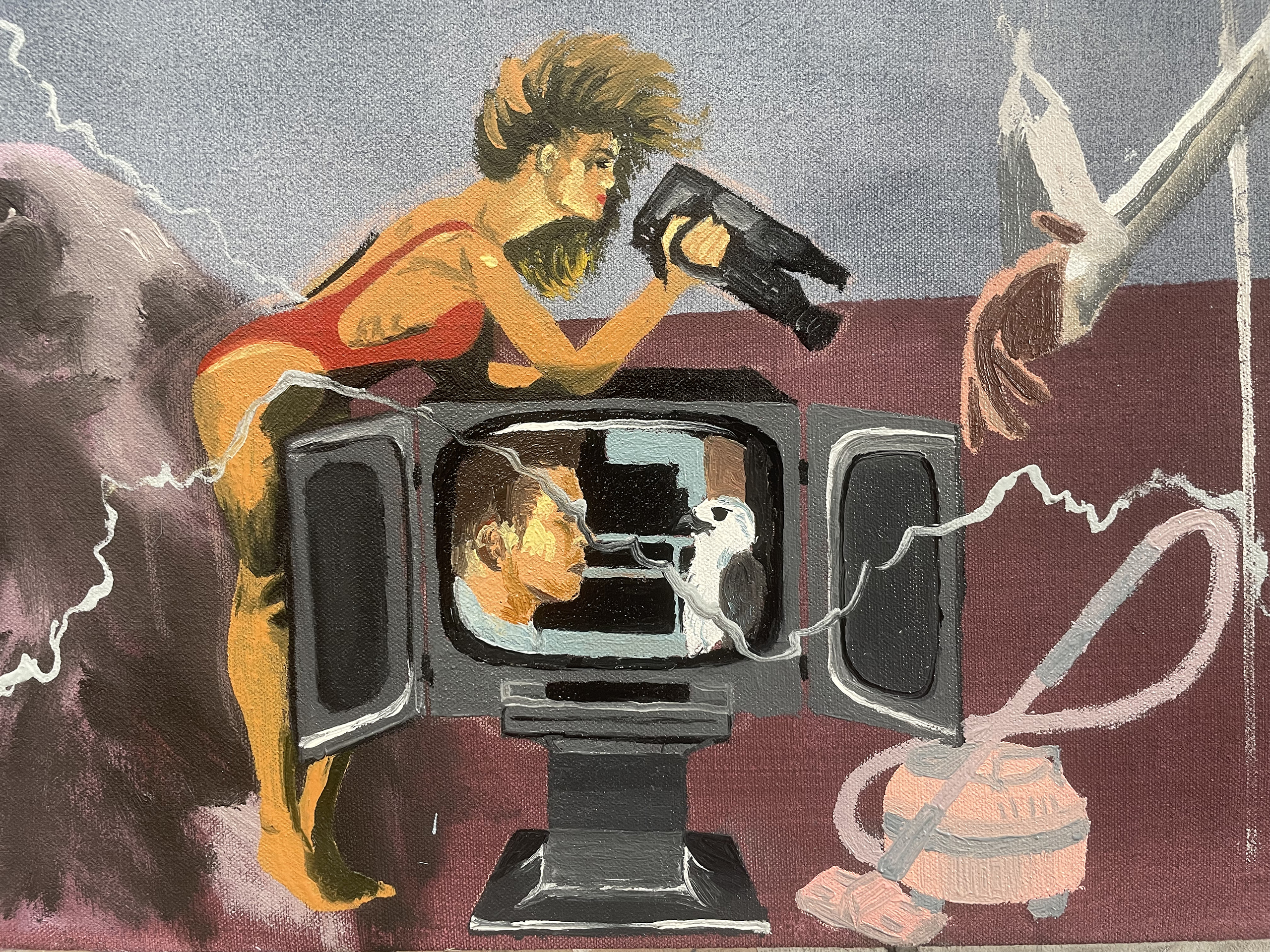
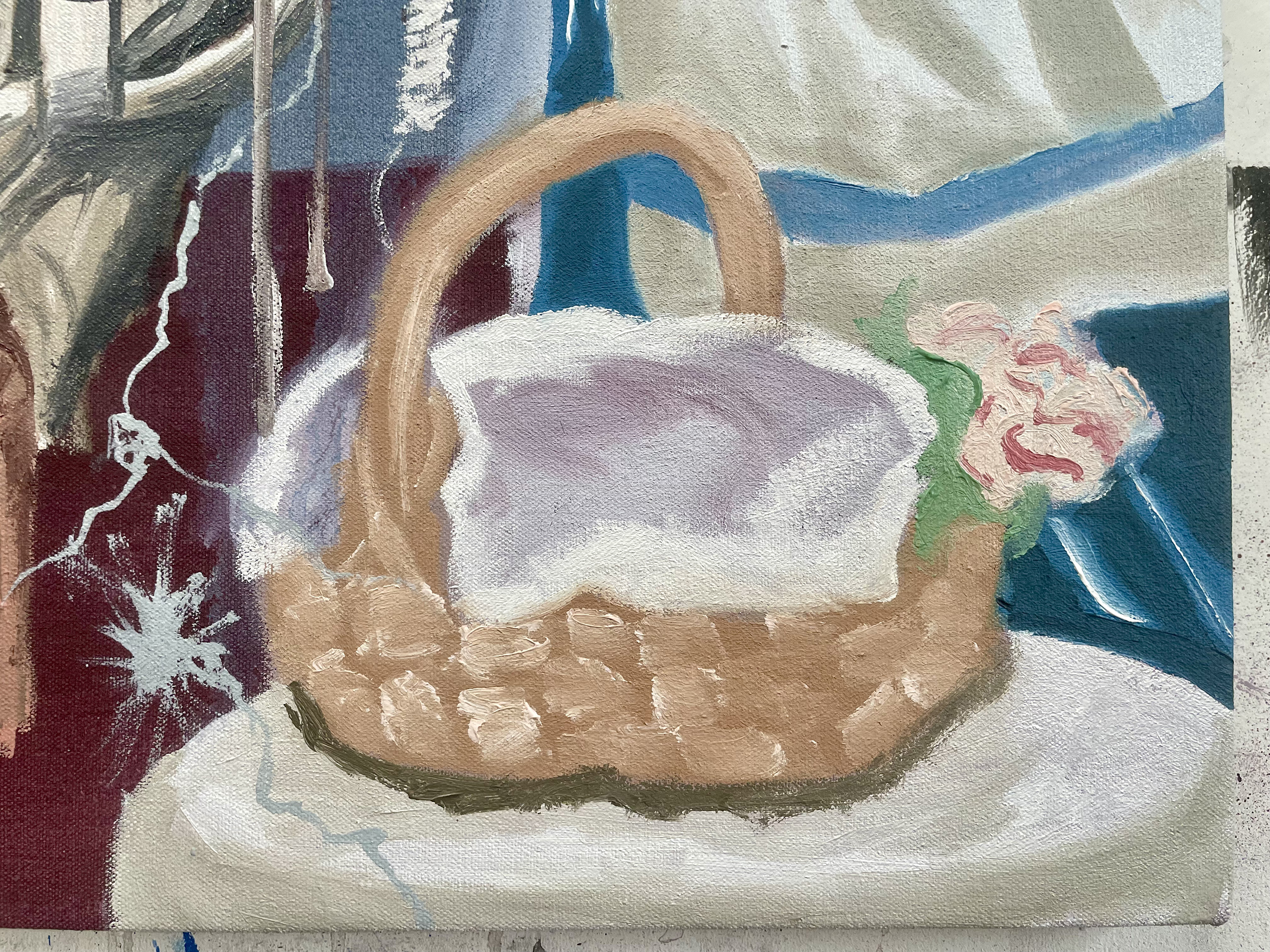
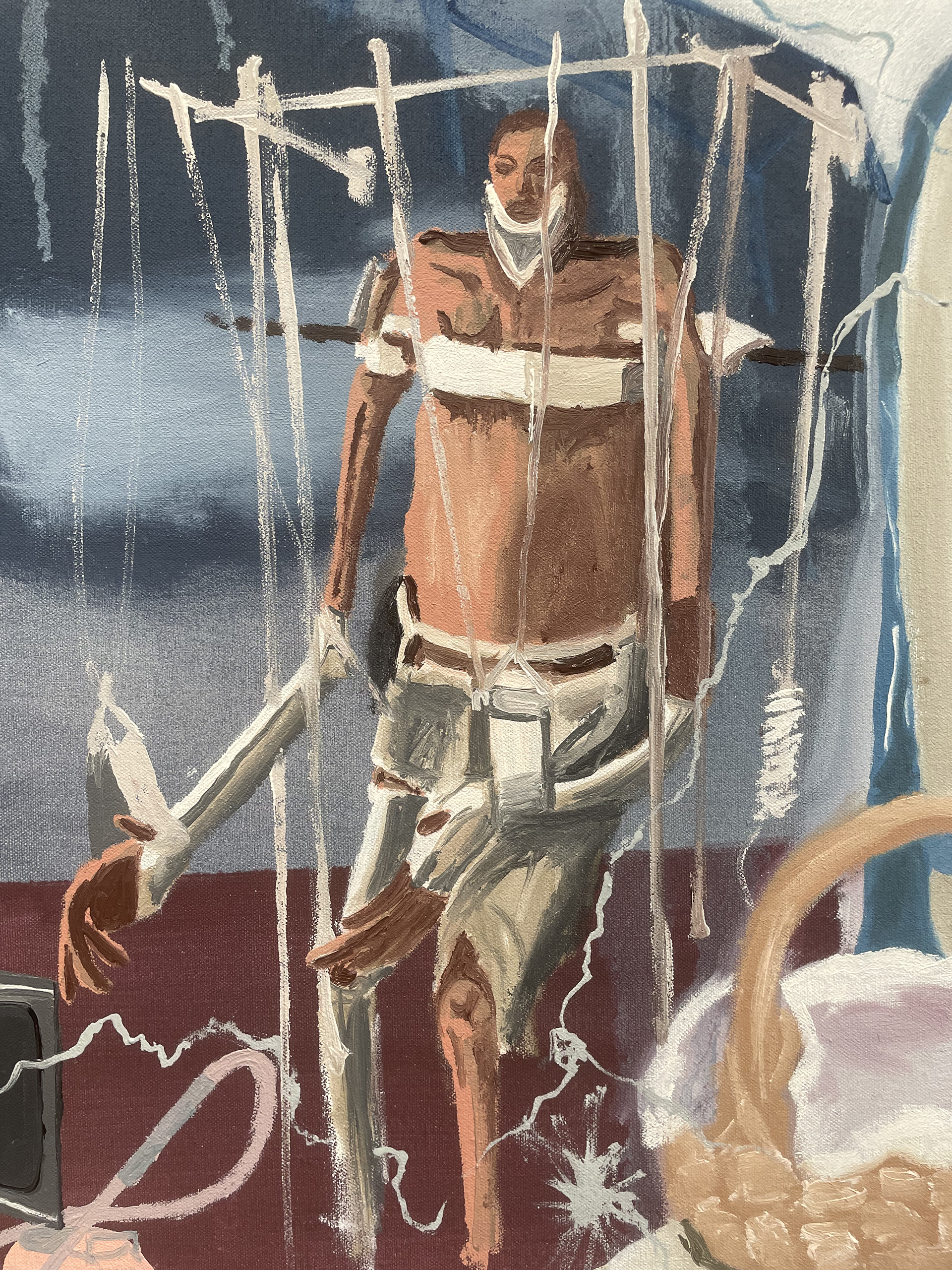
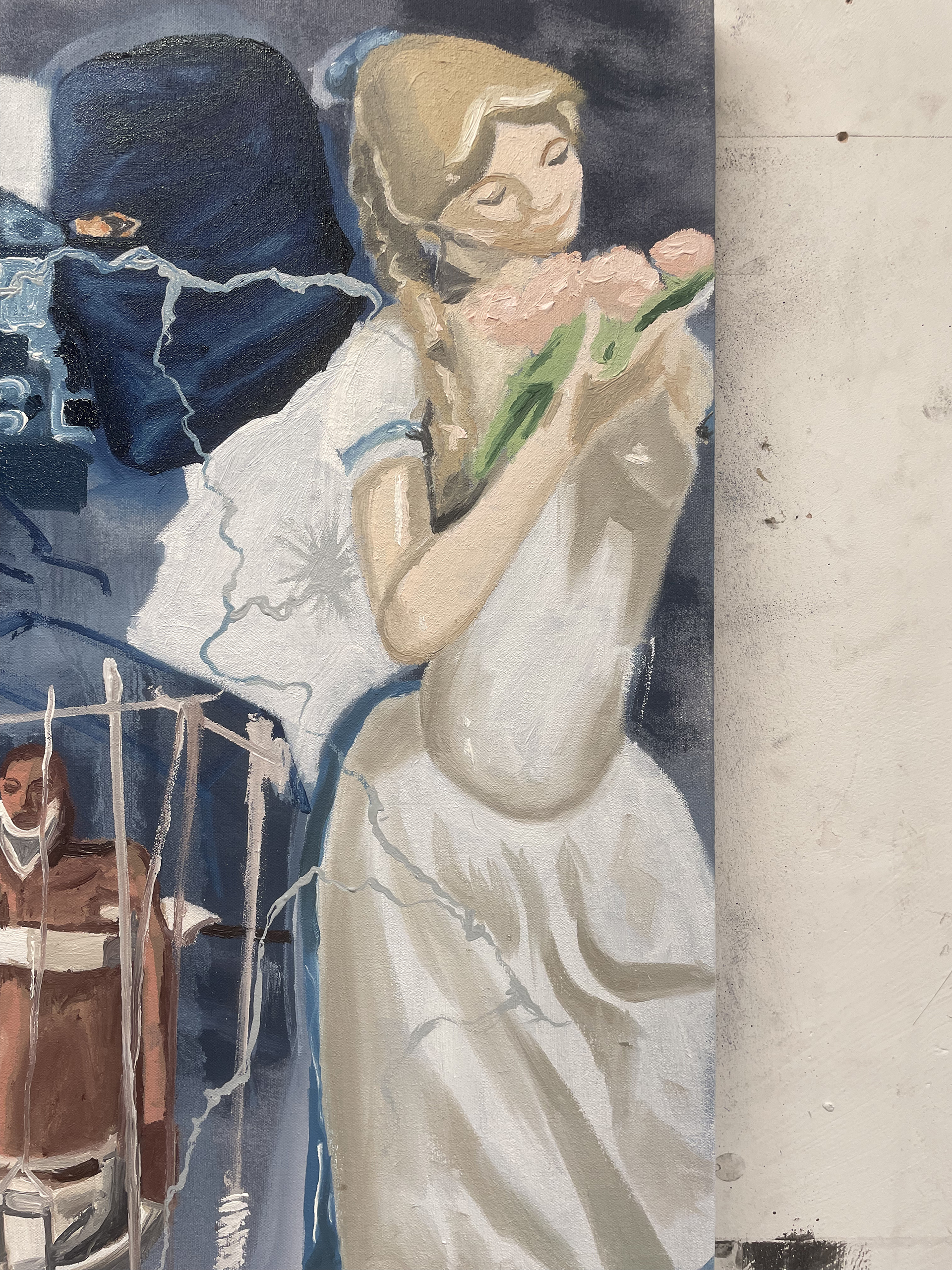
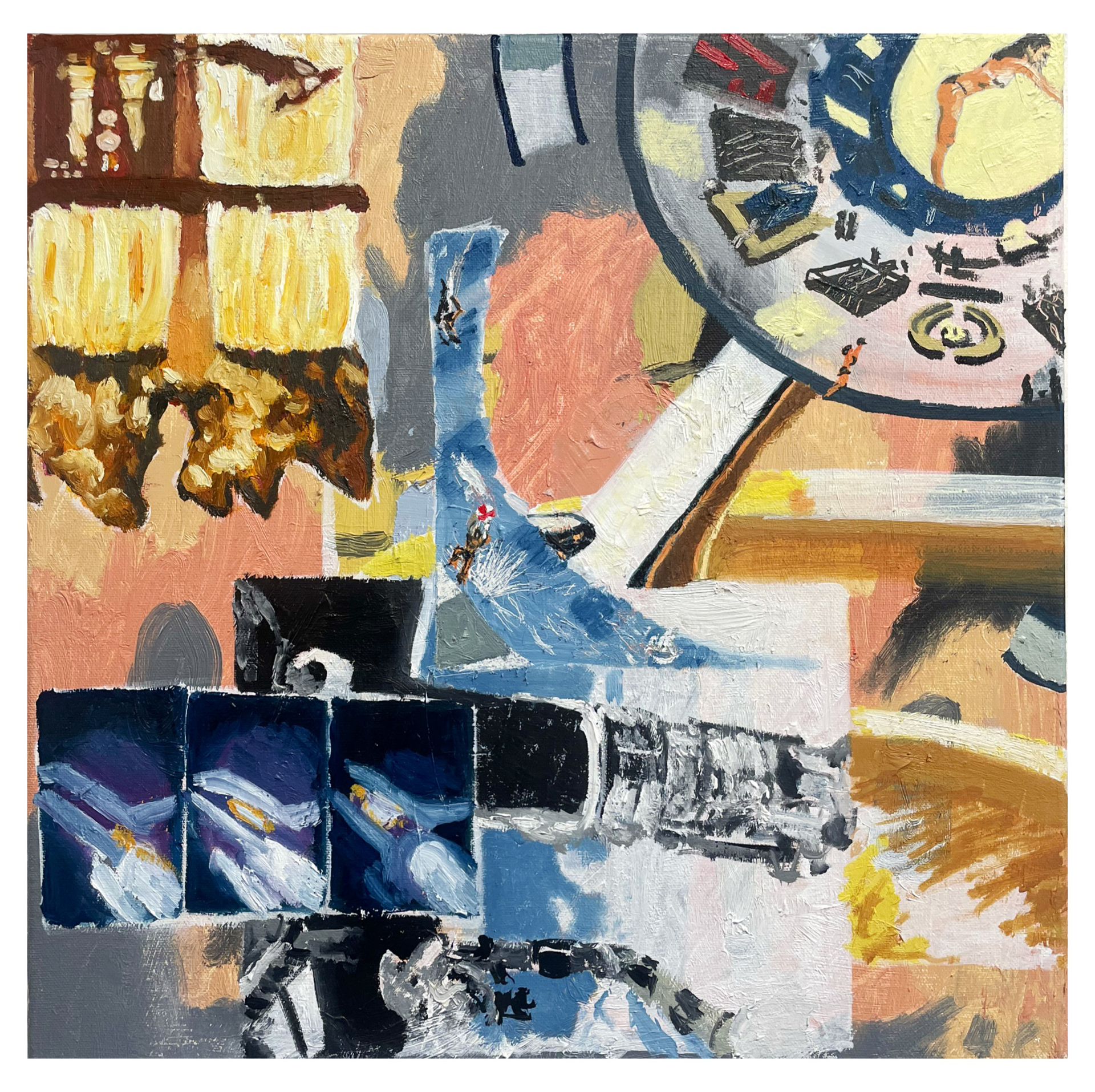
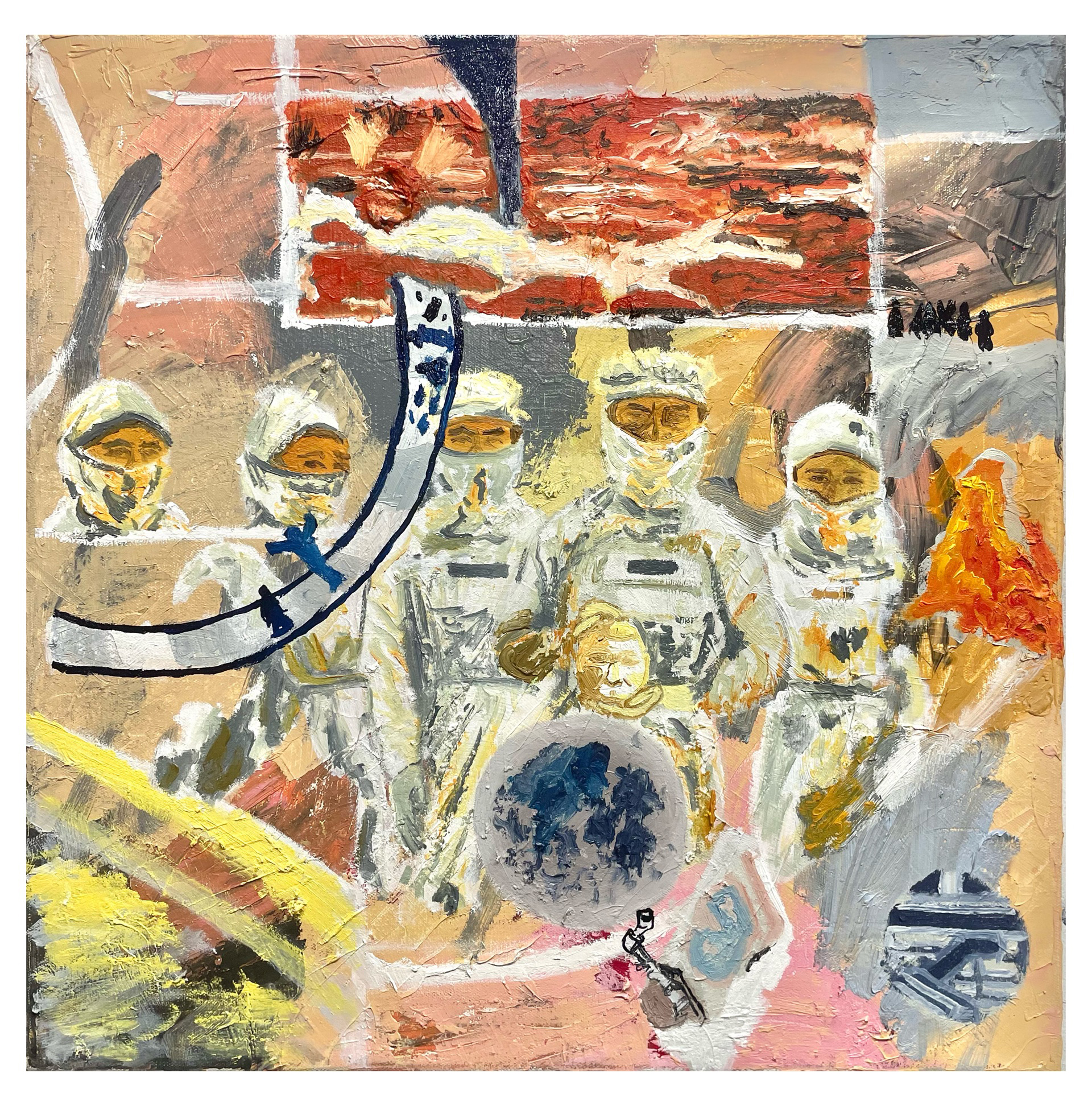
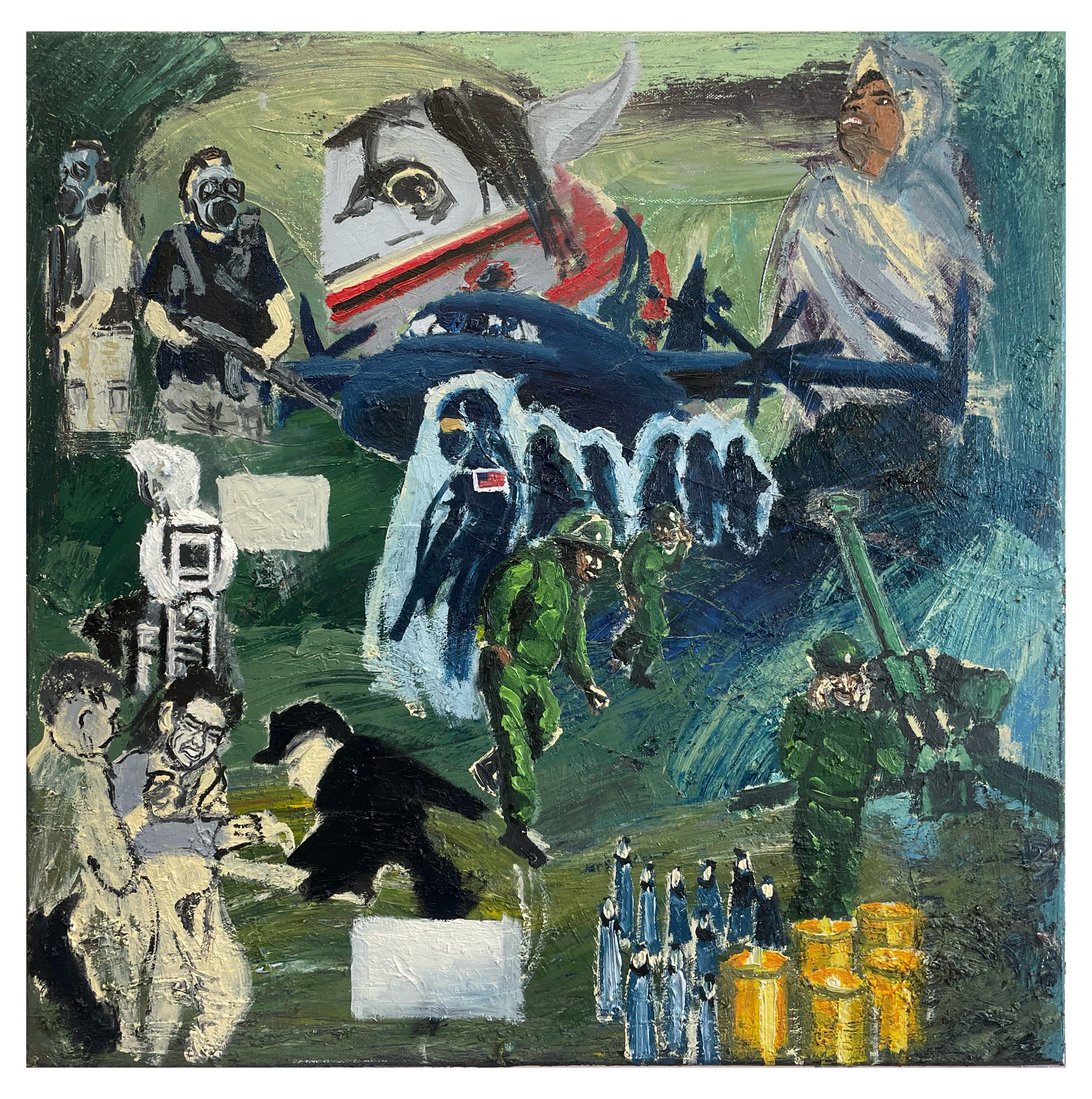
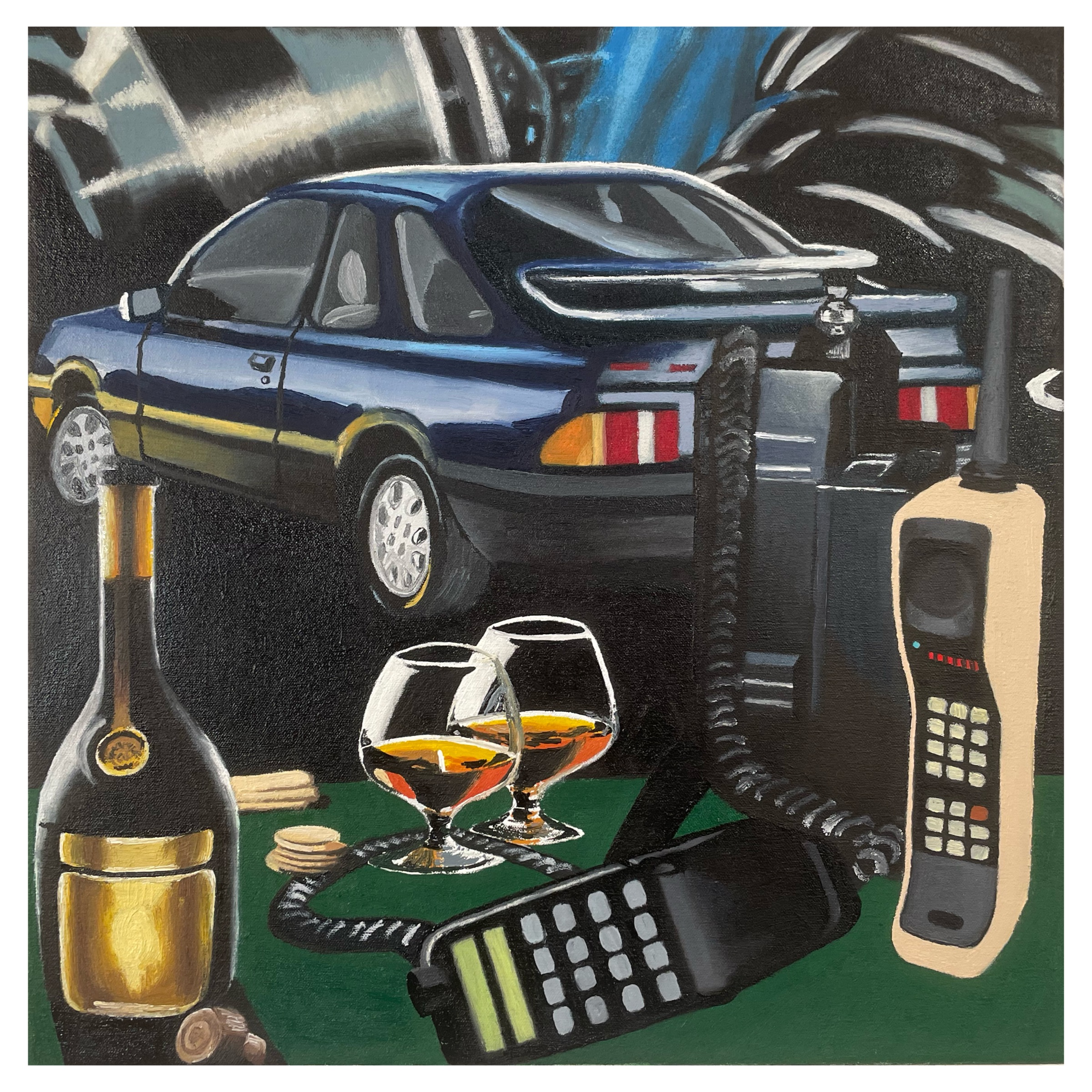
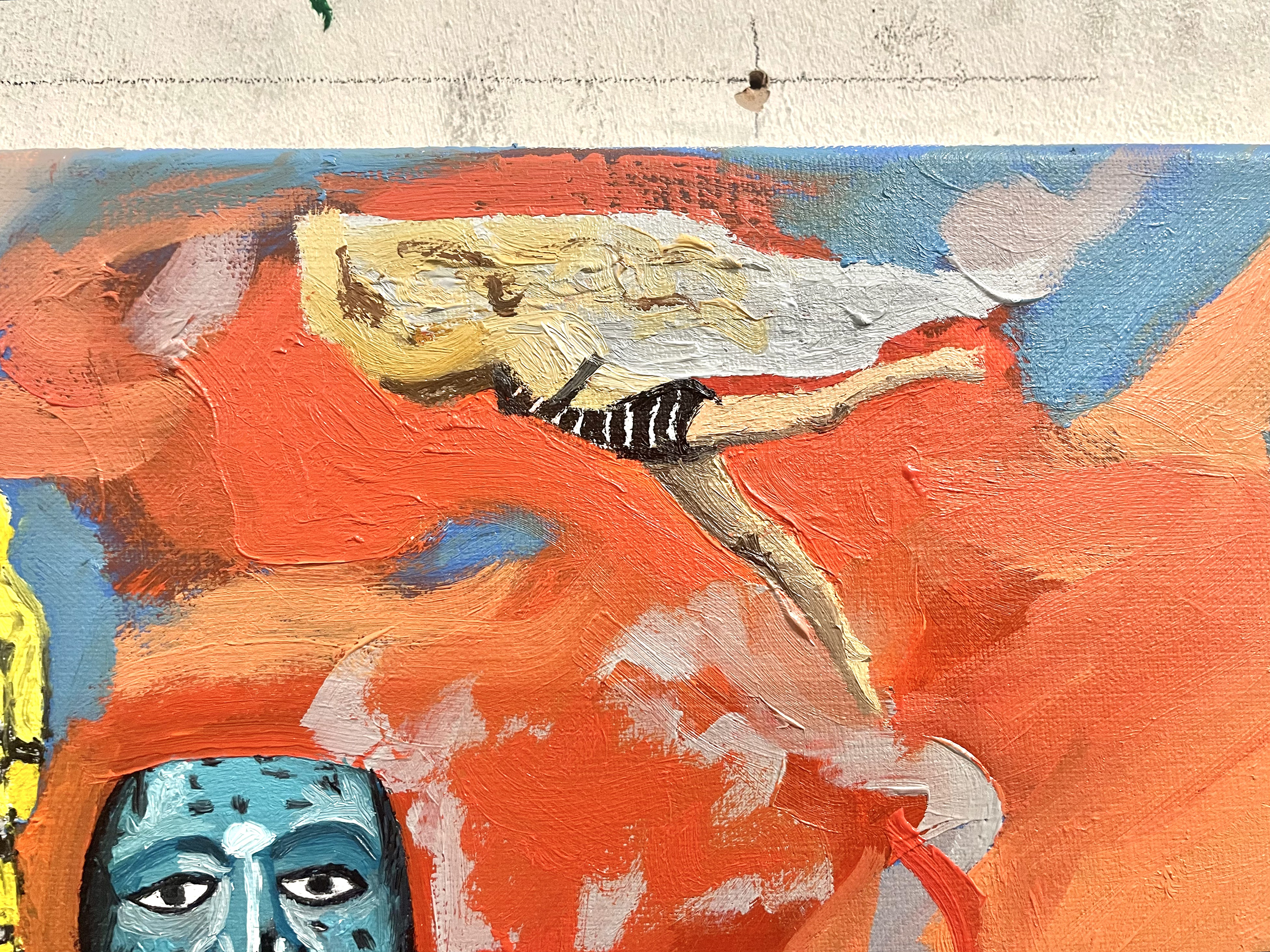
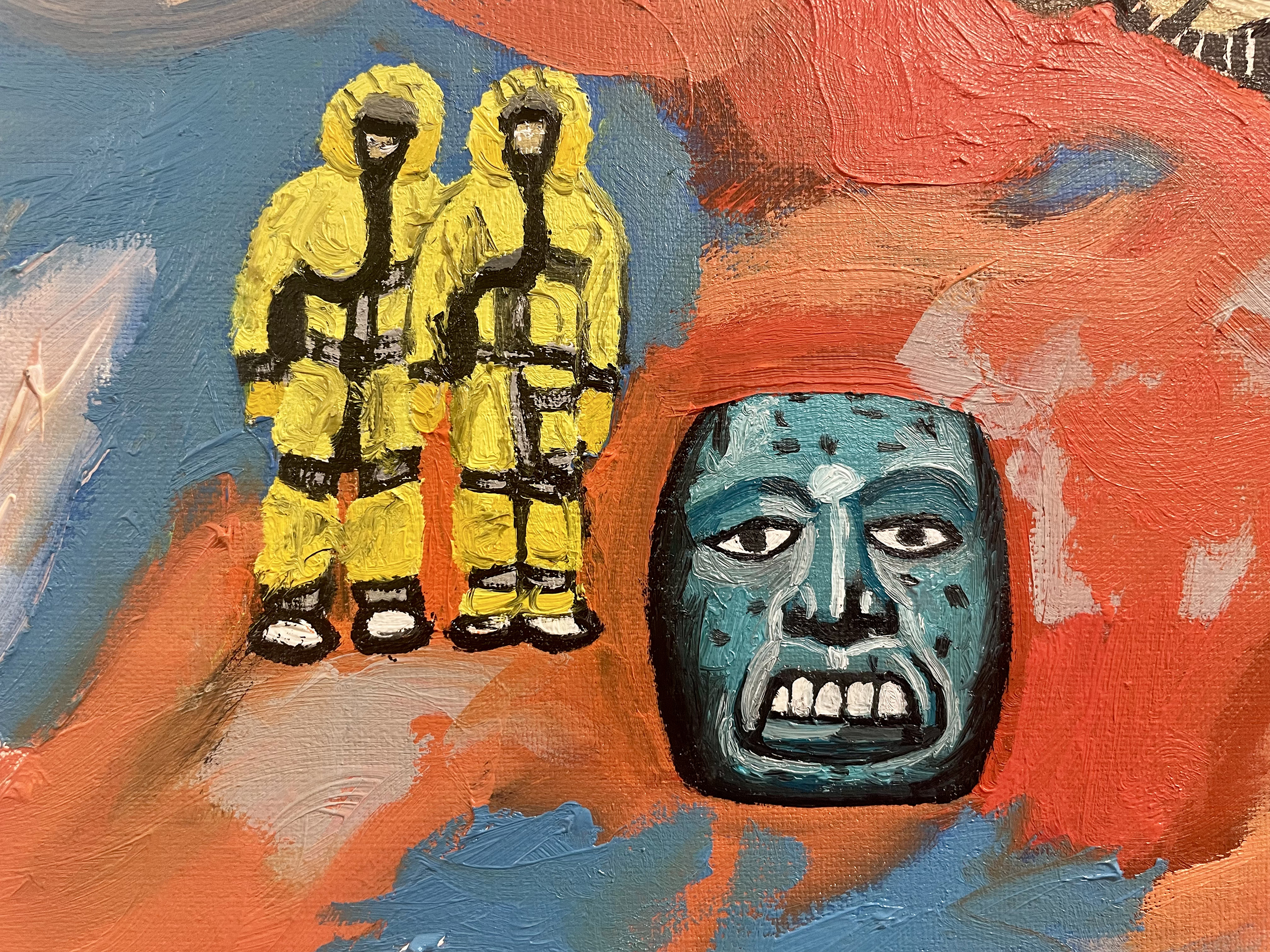
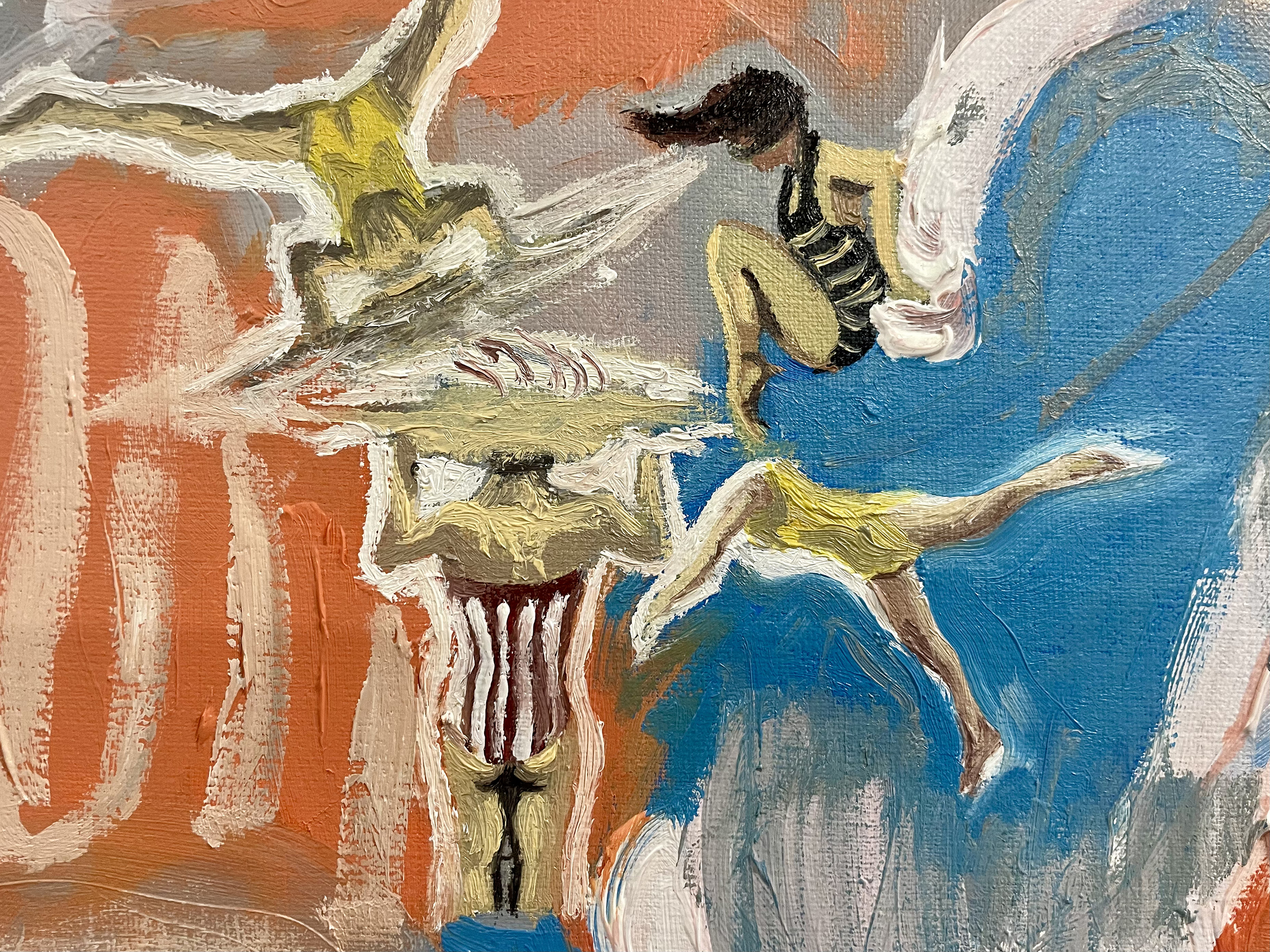
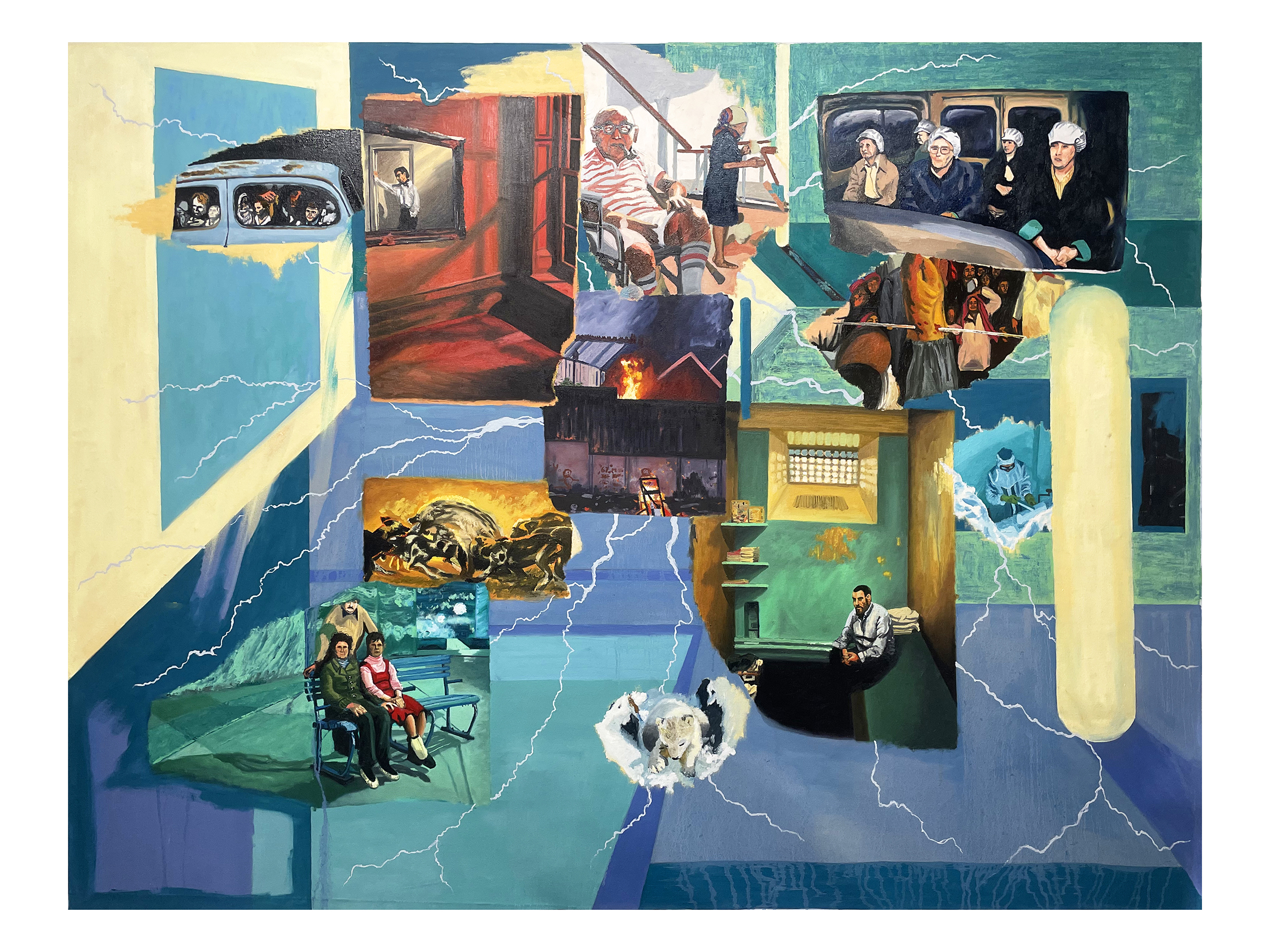
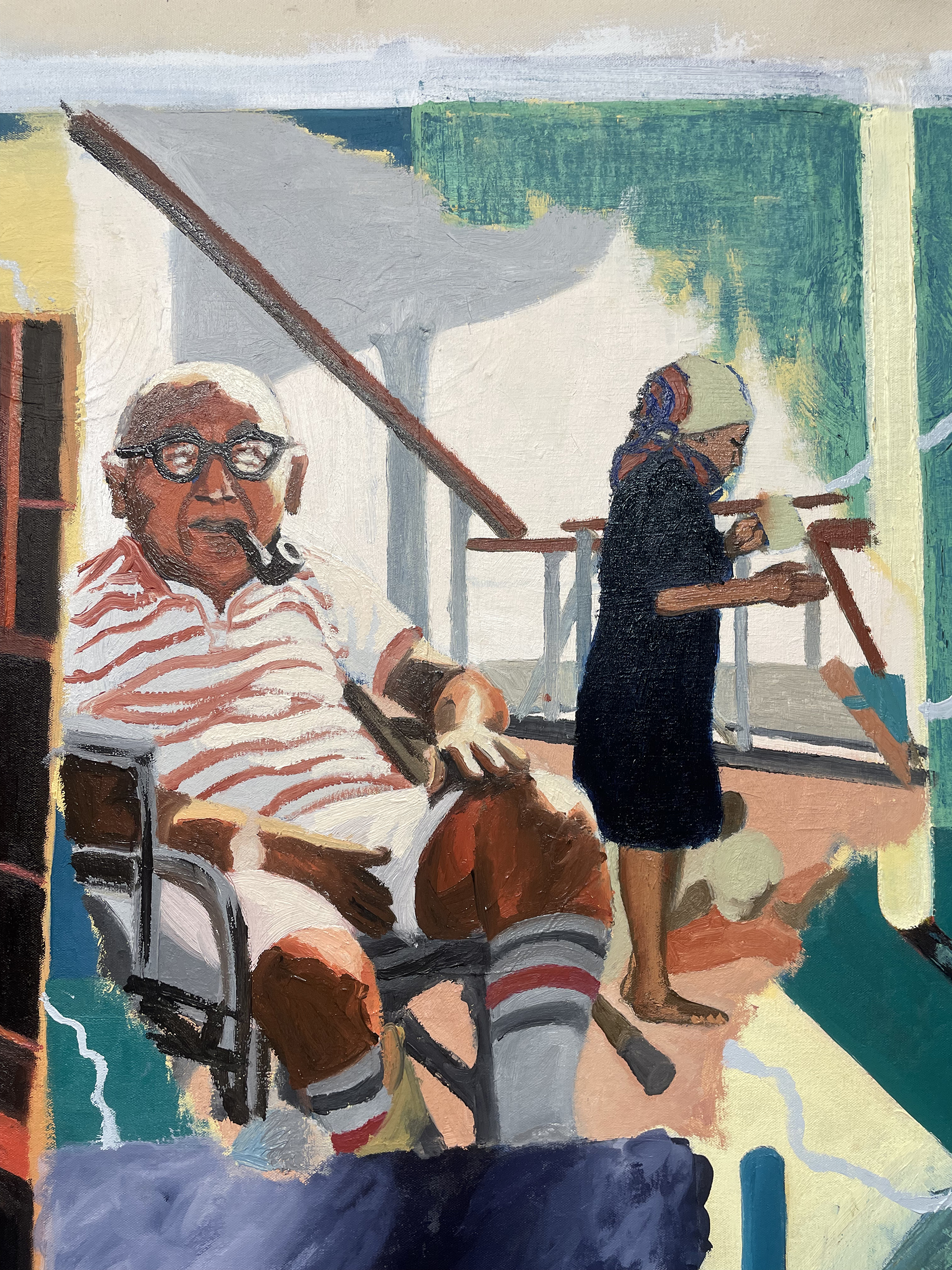
Combining sources as diverse as traditional Japanese theatre costume, photojournalism from Africa, NASA’s Orion spacecraft and emerging health technologies. The multiple-image field of this painting uses juxtaposition to crash together ideas and narratives from vastly different areas of our world and urges the viewer to question what these images have in common and why they have been combined. With no specific narrative in mind, the images act as symbols or archetypes that represent all the different sociopolitical topics that bombard the public daily via various media. 

Details:

Marxist Millionaires

Oil on Canvas
60x100cm

The title comes from a Sunday Times Magazine from the 1980s featuring a story about a handful of the top businessmen at the time of China’s first experiments with free market economics. The article was covering the beginning of the period in Chinese history where the government were pivoting from a planned economy to an international market in a way that would allow China to compete with the rest of the world, but allow the party to remain at the top. I liked the phrase as a wry oxymoron. 

In part, this painting is about using the visual qualities of modern media in conjunction with traditional aspects of painting. This painting is made with the same materials as a Renaissance painting, but it couldn’t exist before the invention of the camera. This is another instance of subverting the traditions of oil painting via not just content but formal qualities, too.

This painting is also another attempt at achieving this idea of a window in the painting, a rectangular hole in the middle of a consistent background image. Having something as inorganic as a rectangle cutting through the surface of the painting talks about flatness and depth in the surface of a painting, something I remained preoccupied with.

A hole in the surface of an image of a space interrupts the illusion of depth, making it flat, but as it is a hole, it suggests there is something behind, so it creates another sense of depth, the image behind, but of course, this is also an illusion. Interrupting an illusion with an illusion is interesting to me conceptually, as it makes me think of tricks politicians play when they seemingly fix one issue by replacing it with another.
Missing

Oil on Canvas
60x60cm

This painting was made from a corrupted digital image file. I was interested to see what this would look like in paint. This is a continuation of my thinking about the subversion of oil painting via modern technology. There is a difference between this work and a collage painting like Marxist Millionaires, and that is the element of time. The collage paintings are built up in layers and take multiple days to complete. Marxist Millionaires had to be done in two stages. This painting was done in one go and took maybe an hour or two; it was very quick. The time element plays into what the paintings look like. The speed, looseness, and composition are all connected to time.

VHS Crowd

Oil on Canvas
60x60cm

This painting is another that talks about the influence of modern technology on the formal qualities of painting. This is a still from some grainy, very blurry footage of a crowd in a stadium, although I can’t be sure whether it’s a TV camera that uses film or a fan’s personal VHS camcorder; the effect is the same. A ‘poor image’ 1 that owes its colours, textures and therefore its atmosphere and mystery to the technology that recorded it. When this is converted into paint, more things happen, the context is taken away, and these accidental formal qualities (qualities often seen as negative and actively avoided by camera makers) become artistic decisions and are bestowed with more meaning. The softness of the image also lends itself to oil paint very well.

  1. In Defence of the Poor Image – Hito Steyerl